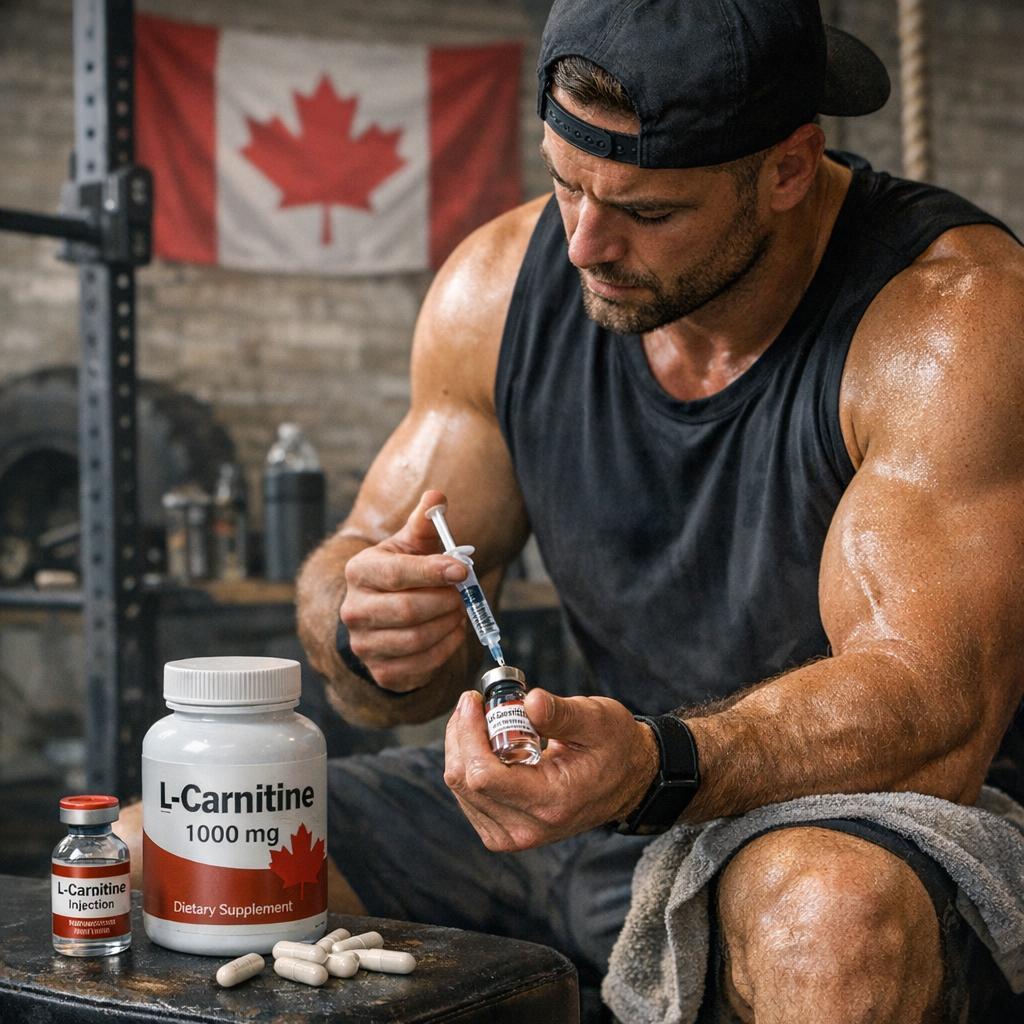
Scroll any Canadian forum and you’ll see bold claims for both.Injectable L-carnitine gets hyped for “locked-in fat loss” and “clean energy,” while oral capsules and liquid promise convenience and low hassle. Simultaneously occurring, Health Canada classifies L-carnitine as a natural health product, not a miracle drug, and the research is a lot more nuanced than supplement ads suggest.
Here’s the reality: in human studies, oral L-carnitine can raise muscle carnitine levels by up to about 20–25% when dosed correctly and consistently, but only after weeks of use. injectables may bypass some absorption limits, but they bring needles, sourcing issues, and real risks—especially if you’re grabbing vials from random Canadian Telegram channels instead of a clinic. You don’t care about hype; you care about what will actually move the needle for fat loss, endurance, recovery, and winter training energy when it’s dark at 4:30 p.m. in Calgary or Montreal.
if you’re cutting for summer in Toronto, trying to keep conditioning sharp through a Winnipeg winter, or just want better training output without living on stimulants, understanding L-carnitine injectable vs oral isn’t optional—it’s the difference between smart investment and expensive placebo.
We’ll break down how each form behaves in your body, what real studies say about fat loss and performance, and how Canadian realities—Health Canada rules, lab access for bloodwork, and sub-zero training seasons—change the decision for you specifically.
By the end, you’ll know exactly when injectable L-carnitine makes sense, when oral is more than enough, and when you’re better off fixing sleep, diet, and training before you spend a dollar more on supplements.
- Muscle impact: Studies show oral L-carnitine can increase muscle carnitine content by roughly 20–25% after 3–6 months when paired with carbs.
- fatigue: research reports up to ~11% lower perceived effort during endurance work with elevated carnitine levels.
- Recovery: some trials show reduced muscle soreness and markers of damage after hard sessions with L-carnitine support.
- Canadian reality: Most L-carnitine used here is oral; injectable access is typically off-label, private clinics, or gray-market sources.
Why L carnitine is even on your radar
L-carnitine exists naturally in your body and acts like a shuttle, moving fatty acids into mitochondria so you can burn them for fuel instead of just storing them. That matters whether you’re grinding through intervals on a spin bike in Vancouver rain or pushing a heavy lower-body day in a cramped condo gym.
Most Canadians eating a mixed diet get baseline amounts from red meat and dairy, but “baseline” isn’t the same as “optimal for performance” when you’re chasing lower body fat, higher work capacity, and better recovery on limited sleep.That’s where targeted L-carnitine supplementation—oral or injectable—enters the picture as a potential edge, not a replacement for fundamentals.
The key question isn’t “Does L-carnitine work?” but “Which form gives you the most return on effort,money,and risk in a real Canadian training schedule?”
- How injectable vs oral L-carnitine actually differ in absorption,effect,and risk
- When each form can realistically help fat loss,energy,and performance—not just in theory
- How Canadian context (Health Canada rules,labs,winter training) changes what’s smart for you
What this guide will help you decide
You’re going to see exactly where injectable L-carnitine can give you an edge—like aggressive fat-loss phases before a photoshoot in Toronto or peak conditioning before ball season in Edmonton—and where oral L-carnitine, taken consistently, is more than enough for steady fat utilisation and recovery support.
You’ll also see the other side: injection-site infections, counterfeit vials floating around Canadian resellers, and why “more direct” doesn’t automatically mean “better results” if your overall plan isn’t dialled. [INTERNAL LINK: L-carnitine safety]
The goal here is simple: by the time you’re done reading, you’ll know whether you should stay oral, go injectable under proper supervision, or park L-carnitine entirely and invest elsewhere in your program.
- ☐ Clarify your primary goal: fat loss, endurance, or recovery
- ☐ Audit your basics: calories, protein, sleep, training frequency
- ☐ decide your risk tolerance for needles and grey-market sourcing
- ☐ Plan how you’ll track results: body comp, performance, or lab markers
How Canadians are actually using L carnitine
[aiomatic_charts type=”Bar” labels=”Oral only,Injectable only,Both forms” data=”65,15,20″ representing=”Approximate usage patterns among Canadian lifters based on gym and coaching observations” colors=”#DC2626,#1E3A8A,#991B1B”]
Once you understand whether injectable or oral L-carnitine matches your goals, back that decision with vetted, high-quality products rather of guessing with random bottles and vials.
You won’t know if L-carnitine is working until you strip away wishful thinking and look at hard signals: strength endurance, work capacity, and body composition over 8–12 weeks. Injectable forms tend to hit faster because they bypass gut absorption, so you’ll often feel a bit more “engine” during heavy sled pushes, prowler work, and higher-rep squats, especially in the dead of a Canadian winter when NEAT (daily movement) drops. That boost matters, but only if you’re already dialled in on protein, sleep, and an actual training plan, not random workouts.
Oral L-carnitine still has a clear lane when you factor in budget,convenience,and the legal landscape under Health Canada. For year-round lifters in Toronto condos or Calgary suburbs who don’t want to mess with needles or grey-market imports, a consistent oral dose paired with carbs around training can still translate into better recovery and less DOMS, even if the effect is subtler and slower. The move that actually pays off isn’t chasing the most “hardcore” option—it’s matching the form to your goal, your risk tolerance, and how you realistically train through Canadian winters and short summers.
Don’t Forget
Bringing your choice into the real world
You do not need a perfect answer on L-carnitine injectable vs oral, you need a workable one that fits your training, budget, and recovery right now.In Canadian conditions—dark winters, long workdays, and limited sun—you use tools that actually move the needle, not whatever is trending on TikTok. if injectable L-carnitine gives you better energy and fat-loss support for your cut, or oral fits your lifestyle and risk tolerance better, the best option is the one you can run consistently for 8–12 weeks and actually measure.
Both injectable and oral L-carnitine can support fat metabolism, training output, and recovery, but they are not interchangeable for every lifter in every city. Injectable shines when you want higher,reliable blood levels,tighter timing around sessions,and you are already comfortable with pins because you run TRT or other compounds. Oral makes more sense when you travel a lot for work, hate needles, or want a lower-friction way to support endurance and recovery during long winter blocks. The payoff is only there if you track the right metrics instead of running on vibes.
- Match route to your actual goal: fat loss, performance, or recovery first.
- Decide what you are willing to monitor: bloodwork, training logs, body comp.
- Be honest about your risk tolerance and how you handle injections.
Your body will not care what Instagram says; it will respond to dose, timing, and total programme stress. If you push heavy in january in Calgary, ride your bike through slush in Vancouver, or grind late lifting sessions in downtown Toronto after a 10-hour desk day, the same rules hold: control your inputs, tighten your variables, and give the protocol long enough to work. That is how you tell whether injectable L-carnitine or oral L-carnitine is earning its place in your stack, instead of guessing based on how “energised” you feel on a random Tuesday.
This is also where canadian reality matters. Health Canada oversight, access to legitimate products, and the quality of your source will decide whether the vial in your hand helps your cut or just irritates your glute. When you are already investing in coaching, decent food, and a gym membership, low-grade L-carnitine—oral or injectable—is a false economy. If you would not accept questionable lab work for your blood, do not accept it for your supplements or injectables either.
The last piece is alignment with your training phase. During a slow winter cut, injectable L-carnitine can pair well with a structured deficit, cardio, and resistance training, especially if you are already pinning and dialled in on routine. During a hectic summer with travel, patios, and inconsistent sleep, oral L-carnitine may keep more people compliant, even if the absolute effect is smaller. You are not choosing a forever route; you are choosing what fits the next mesocycle, the next weather shift, and your next power or conditioning block.
- ☐ Lock in your training split and cardio plan for the next 8–12 weeks.
- ☐ Decide whether injections realistically fit your weekly routine and stress levels.
- ☐ set measurable targets: scale trend, waist, performance, or conditioning outputs.
- ☐ Choose a vetted Canadian-friendly source with consistent quality control.
Once those pieces are in place, L-carnitine—oral or injectable—stops being a gimmick and becomes another tool you can deploy with intent. You are not chasing magic; you are stacking two percent wins: better energy in week four of a deficit,slightly more power output on your intervals,one extra set at the end of leg day when every cell in your body wants to call it. Over a Canadian winter,those “small” wins add up faster than you think.
You now have enough details to make a targeted call: injectable for higher-impact,higher-commitment phases,oral for convenience and lower friction. use your schedule, your goals, and your own tolerance as the filter. That is how you build a set-up you can actually run, track, and improve season after season, instead of hopping between trends every time the weather changes.
You are not short on information anymore; you are only short on execution. Pick your route—injectable or oral—tie it to a clear training block, and run it with intent. Then adjust based on data, not hype. That is how serious Canadian lifters and athletes turn a simple compound like L-carnitine into a real performance edge, not just another bottle collecting dust next to the protein tub.
If you are ready to test injectable or oral L-carnitine properly in your next training block, start with vetted products so the only variable you are testing is your protocol, not your source.
🔗 Related on Steroids Canada