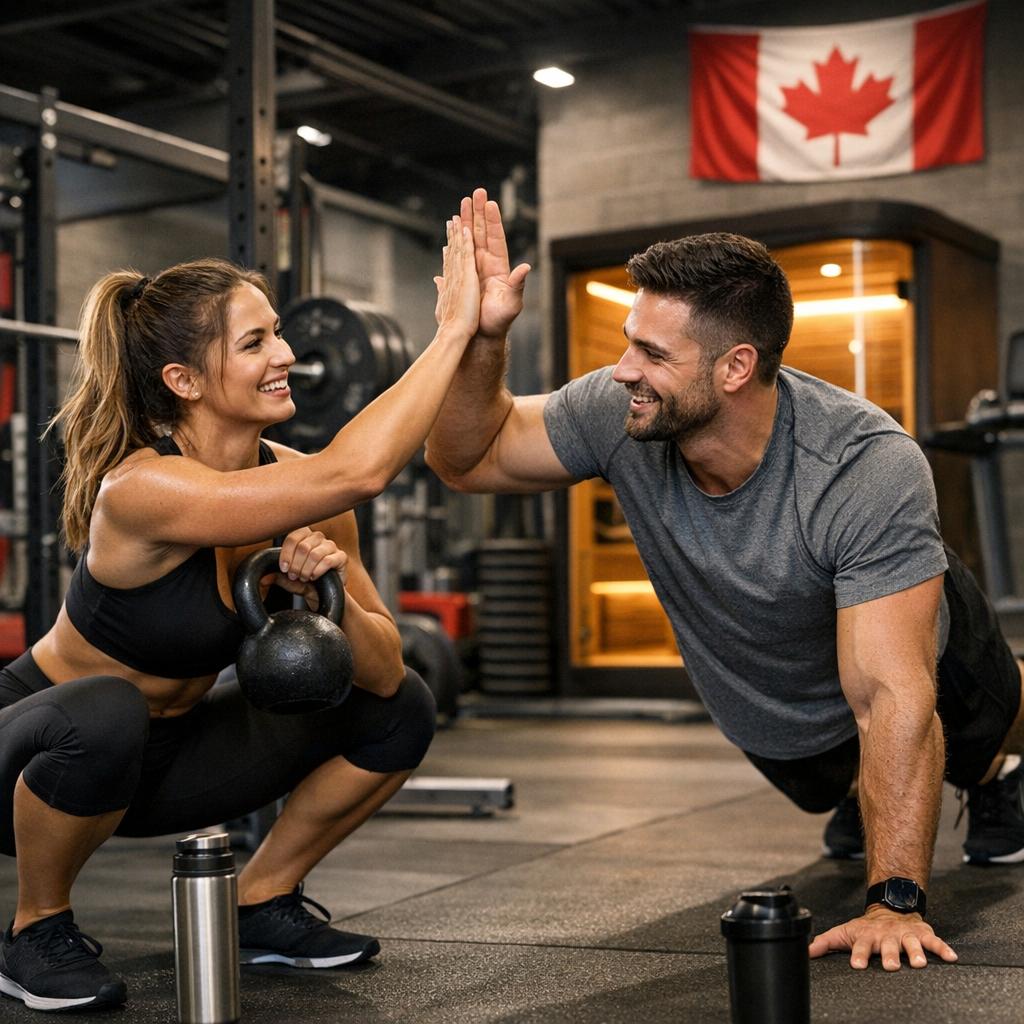



Sauna use for fat loss gets thrown around Canadian fitness centres the way protein myths get tossed around change rooms. “Crank the sauna, burn more fat.” You’ve probably heard some version of that from a trainer, a buddy, or the stranger doing sit-ups on the sauna floor.
You don’t have time for bro-science. You want to no if those 15–20 minute post-workout sessions meaningfully impact body fat, metabolism, and recovery, or if thay’re just a glorified warm hug during a Toronto cold snap.
Here’s what the research actually shows: regular sauna use can increase resting heart rate, raise energy expenditure modestly, and improve cardiovascular health, but the direct calorie burn is smaller than most people sell you on. In a Finnish-style sauna session, you’re typically looking at roughly a 25–33% bump in calorie burn compared to resting, not the “500 calories in 20 minutes” nonsense that gets marketed.
- Calorie bump: Traditional sauna use can raise energy expenditure by about 25–33% over resting levels during the session
- Heart rate: Typical sauna sessions push heart rate into a 100–150 bpm range, similar to an easy cardio effort
- Frequency sweet spot: Studies show health benefits at 2–4 sessions per week of 10–20 minutes each
- Hydration hit: A single 15-minute session can lead to 0.5–1.0 litres of sweat loss, especially in dry winter air
So if sauna use for fat loss isn’t the magic bullet, why are more Canadian gyms in cities like Vancouver, Ottawa, and Edmonton pushing sauna access as part of their “body transformation” pitch? Because heat, used properly, can support the pieces that actually drive fat loss: consistent training, adherence to a realistic nutrition plan, better sleep, and faster recovery.
The problem is how most centres frame it. you’re sold the sauna as a fat-melting chamber instead of what it really is: a strategic tool to slightly increase total daily energy expenditure,improve recovery,and help you stay on track when the dark,icy months make outdoor cardio and motivation tougher.
This article cuts through that noise. You’ll see what the science actually says, how that lines up with what Canadian facilities are offering, and how to structure sauna use so it supports fat loss instead of just dehydrating you and wrecking your next workout.
Why saunas are being sold for fat loss
Most Canadian fitness centres position sauna access as a premium add-on tied to transformation packages, winter “shred” challenges, or VIP recovery lounges. The promise is usually simple: sit in heat, burn more fat, get lean faster, especially when the January blizzard kills your outdoor step count.
From a marketing viewpoint,it makes sense. Saunas feel hardcore yet relaxing, they photograph well on Instagram, and they tap into that scandinavian longevity narrative that plays well with educated, health-focused Canadians who read up on Health Canada guidelines and follow new research.
But when you strip away the marketing, the real value of sauna use for fat loss lies in how it slots into your overall program: heat-induced cardiovascular load, mild metabolic bump, improved blood flow, and psychological stress relief that helps you stay consistent when work, kids, and the Toronto–style freezing rain try to knock you off track.
- Sauna sessions primarily cause water loss, not direct fat loss
- The true fat loss driver is your weekly calorie deficit, not sweat volume
- Sauna works best as a recovery and adherence tool inside a structured training and nutrition plan
If you’ve ever stepped on the scale after a hard sauna and watched it drop 1–3 pounds, you’ve seen the illusion first-hand: almost all of that is fluid, and most of it comes back within 24 hours once you rehydrate. The goal isn’t to chase the “sauna scale drop”; it’s to leverage sauna use so your training stays sharp, your joints feel better, your sleep improves, and you can keep hitting the gym four to six days per week—through february slush and dark 4 p.m. commutes.
The rest of this article breaks down what the science actually supports, how Canadian facilities stack up against that research, and a practical, no-nonsense way to use sauna sessions to support real fat loss rather of chasing short-term sweat weight.
Estimated calorie burn in 30 minutes
[aiomatic_charts type=”Bar” labels=”Resting,Easy walk,Traditional sauna” data=”40,120,55″ representing=”Approximate calories burned in 30 minutes for a 75 kg adult” colors=”#DC2626,#1E3A8A,#991B1B”]
- ☐ Confirm your weekly calorie deficit is dialled in
- ☐ Hit at least three strength sessions per week
- ☐ Average 7,000–10,000 steps per day,even in winter
- ☐ Use sauna to enhance recovery,not replace conditioning work
Build a serious fat loss plan around smart training, nutrition, and recovery first, then use tools like sauna and performance support strategically to accelerate your results.
sauna fat loss myths exposed
Most Canadian fitness centres still sell sauna use for fat loss like it’s a magic calorie incinerator, but the scale drop you see after a 20-minute session is mostly water, not body fat. Research from Canadian and Scandinavian labs shows a typical sauna bout might burn only 50–100 extra calories, about the same as a slow 10-minute walk, while the bulk of the weight change is transient fluid loss and electrolyte shift. When you rehydrate,that “miracle” kilo vanishes,and if you bank on sweat alone instead of a proper training and nutrition plan,you stall out fast.
The real advantage is indirect: smart heat exposure can improve recovery, stress tolerance, training adherence, and even your ability to show up again tomorrow when winter darkness kills motivation. That’s the part most gyms never explain when they slap “fat-burning sauna” on a poster in January beside a two-for-one membership promo. You need to treat the sauna like a performance and lifestyle tool that plugs into a larger strength, conditioning, and nutrition framework, not a shortcut that lets you coast through lazy sessions and hope sweat equals progress.
- Calorie burn: 20 minutes of sauna adds roughly 50–100 kcal, not hundreds
- Hydration loss: You can lose 0.5–1.5% of bodyweight in sweat per session
- Consistency: Studies showing benefits use 3–7 weekly sessions, not “once in a while”
- Heart strain: Heart rate can climb 30–40 bpm above resting during hot sessions
What sauna heat really does in your body
When you sit in 80–95°C dry heat, your core temperature nudges up by 0.5–1.5°C,blood vessels dilate,and your heart rate climbs into what feels like a very light jog,even though you’re parked on a bench. This heat stress pushes your cardiovascular system to redistribute blood toward the skin,ramp up sweating,and manage electrolyte balance,all of which demands a modest energy cost but not anywhere close to what a well-structured lifting session delivers. You also trigger heat shock proteins, which help protect and repair cells, a small but meaningful boost for recovery if you’re regularly hitting heavy squats and deadlifts.
Used consistently, this stress teaches your body to handle thermal load better, which can carry over into high-intensity conditioning where you normally overheat, especially in summer in Montreal or on humid Vancouver days. You’ll likely notice lower resting heart rate over time, improved circulation, and better sleep quality as your nervous system relaxes once you step out and cool down. None of this bypasses the need for a calorie deficit, but it does create a better internal surroundings for you to train hard, recover fully, and keep showing up to the gym when everyone else in January is already sliding back to the couch.
- Vasodilation increases blood flow to skin and muscles, supporting nutrient delivery post-training
- Heat shock proteins help cellular repair and resilience after heavy lifting or intervals
- Sympathetic “fight-or-flight” winds down on exit, helping you sleep and manage cravings
Pairing sauna with lifting and conditioning
You get the best fat loss results when sauna use rides shotgun with a structured gym programme built around progressive strength work and sharp conditioning.Think of your training week anchored by big patterns—squat, hinge, push, pull, carry—hit 3–4 days, with 1–2 short conditioning pieces like sled pushes, intervals on the Assault bike, or rower sprints stitched in. Sauna then slots in as a recovery and resilience layer either promptly after these sessions or on lighter days, helping you unwind your nervous system and maintain training volume without feeling fried.
The main mistake Canadian lifters make is baking themselves for 30–40 minutes right after a brutal barbell session, then wondering why they feel flat the next day. Extended heat piles on more systemic stress at the exact moment your body already has a big recovery bill due. Rather, you want tight, controlled exposure: 10–20 minutes post-lift, or two shorter rounds with a cool-down break, aiming to leave feeling challenged but not smoked. The goal is to walk out of GoodLife in Toronto or a local strength gym in Saskatoon feeling calmer, loose, and ready to eat and sleep, not dizzy and wrecked.
Making sauna your winter weapon
Canadian winters punish consistency: dark mornings,icy sidewalks,and wind chill that makes even the walk from the parking lot to the gym feel like an expedition. Here’s where sauna use for fat loss really pays off, not by melting fat directly, but by giving you a psychological and physiological reward for braving the cold and showing up. Knowing there’s a 10–15 minute heat session waiting after your barbells can turn a February squat day in Edmonton from something you dread into a ritual you actually look forward to.
That heat also helps thaw out stiff joints and tight muscles that never feel fully warm after a -20°C commute,lowering your injury risk and letting you train harder safely. When you stack the sauna with consistent lifting and sensible nutrition through december, January, and February, you don’t just survive winter—you exit into the Vancouver cherry blossoms or Toronto spring already leaner and stronger than the crowd that hibernated. That long runway of winter discipline gives your fat loss a massive edge once outdoor steps, bike rides, and park sessions become easier again.
- ☐ Keep a stable training schedule even when roads and transit suck
- ☐ Use sauna as your “reward” anchor to get you to the gym
- ☐ Bring electrolytes and water so post-sauna hunger doesn’t derail your macros
- ☐ Dress warm post-session so you don’t shock your system in -15°C parking lots
Weekly sauna plan for busy lifters
If you’re juggling work, family, and Canadian commute chaos, your sauna plan has to be simple, repeatable, and slotted tight to your lifting schedule. A strong baseline for fat loss is three gym days with attached sauna sessions plus one optional “recovery” day where you hit light movement and a shorter heat exposure. You’re not trying to win a “who can stay in longest” contest; you’re chasing consistent, modest stress that makes your body better at handling training and daily life, while staying within Health Canada safety recommendations for hydration and cardiovascular load.
A practical structure for a 25–45-year-old lifter: train Monday,Wednesday,and Friday,lifting 45–60 minutes,then hit 10–15 minutes of sauna with water on hand and a clear exit time. Add a saturday or Sunday 20–30-minute walk plus 8–12 minutes of light sauna if your gym is quiet, then prioritise sleep and solid protein at every meal to support fat loss.Over 8–12 weeks, that routine beats any random “detox sweat” approach; you’ll see better body composition, tighter waist measurements, and higher training quality without needing to live at the gym.
Weekly training and sauna time split
[aiomatic_charts type=”Bar” labels=”Strength work,Conditioning,Sauna” data=”180,60,45″ representing=”Weekly minutes for a busy Canadian fat loss plan” colors=”#DC2626,#1E3A8A,#991B1B”]
When you should skip or alter sauna use
Some lifters should press pause or at least tighten up their protocol before turning heat into a weekly habit, especially if they’re chasing aggressive fat loss. If you have cardiovascular disease, uncontrolled high blood pressure, kidney issues, are pregnant, or are using certain medications (including stimulants and some antidepressants), you need a green light from your doctor or nurse practitioner first; Canadian guidelines lean conservative here for good reason. Even if you’re or else healthy, walking into a 90°C room dehydrated, underfed, or post-night-out in downtown Toronto is a fast track to dizziness, headaches, or passing out on the bench.
Dial things back if you’re in a hard calorie deficit, deep into a cut, or stacking multiple stressors like shift work, poor sleep, and heavy caffeine intake, as your recovery margin is already razor-thin. In those phases,keep sauna to 8–12 minutes,two to three times per week,and prioritise hydration and electrolytes,especially during prairie cold snaps where dry air and indoor heating already pull fluid out of you. Your goal isn’t to prove toughness; it’s to use the smallest effective dose of heat that supports your lifting, your hormones, and your long-term ability to stay lean without crashing your system.
Pair smart sauna use with serious training, tight nutrition, and the right performance support so you strip fat, hold muscle, and stay locked in all winter long.
What Actually Matters
What this means for your next session
Sauna use for fat loss only pays off when it’s built on real training, tight nutrition, and consistent sleep, not as a standalone “hack” your fitness center up-sells after your workout.
You’ve seen how heat exposure can support recovery, improve insulin sensitivity, and nudge your weekly calorie balance, but also how fast those benefits disappear if you treat it like a shortcut instead of a tool.
The message is simple: your squat rack, your food scale, and your sleep schedule still drive the bus; the sauna just helps you stay on the road in a Canadian winter.
- Lock in a structured lifting and conditioning plan first, then layer sauna sessions 2–4 times per week.
- Treat any “water weight” drop as irrelevant to your long-term body composition and focus on weekly progress,not post-sauna scale readings.
- Use the sauna to improve adherence in brutal Canadian months when dark evenings and -20°C windchill crush your motivation.
Most commercial Canadian fitness centres sell the sauna like a calorie-burning machine, but you now know the real play is better recovery, more training volume, and higher weekly activity because your joints and nervous system can handle it.
Instead of buying into the marketing, you can walk into any GoodLife, YMCA, or autonomous Toronto, Calgary, or Halifax gym with a clear standard for what “smart sauna use” actually looks like for body fat loss.
This mindset shifts you from “trying the sauna” to running a personal experiment where you track sleep quality, resting heart rate, training load, and body measurements over 6–8 weeks.
If your strength numbers, waist measurement, and energy are trending in the right direction, the sauna is earning its keep; if not, you adjust like you would any other part of your programme.
Stacking your Canadian winter advantage
Our winters are a built-in stress test, with less daylight, more indoor time, and fewer spontaneous steps, which makes any tool that keeps you training and recovering consistently far more valuable than it looks on paper.
Finnish-style sauna protocols that show 40–50 percent reductions in cardiovascular mortality mean more when you realize your February week in Ottawa or Saskatoon is already attacking your mood, sleep, and NEAT before you even factor in work stress.
Use that context: if a 15–25 minute heat block after training helps you sleep deeper,manage appetite,and actually show up to your next session,it’s doing far more for fat loss than the sweat dripping off your forearms suggests.
most Canadian fitness centres are getting the messaging wrong by overselling direct “fat burn” and underselling things like improved work capacity, heart health, and psychological resilience you can actually sustain year-round.
Your job is to flip that script and judge every minute you spend in the heat by whether it lets you train harder, recover faster, and stay consistent across real weeks, not isolated workouts.
The second row is where your results live, especially once the novelty wears off and you’re deep into a 12–16 week cut or performance block.
You don’t need your fitness centre to change its marketing; you just need a clear personal framework so you’re not pulled into gimmicks every time a new “fat-melting” poster goes up in the locker room.
Your next three moves
Before your next visit to your local fitness centre, decide exactly how you’re going to test sauna use instead of casually “trying it” after a random workout.
Think like you’re running a small N=1 lab in Vancouver, montreal, or Winnipeg, not just following whatever the front desk is pushing this month.
- ☐ Set a weekly training minimum (sessions, steps, calories) before adding sauna
- ☐ Choose a clear sauna protocol (for example, 15–20 minutes at moderate heat, 2–4 times per week)
- ☐ Track sleep, body weight trend, and 1–2 performance markers
- ☐ Adjust sauna frequency based on real outcomes, not how “hard” the session felt
If you’re already dialled in with progressive lifting, protein in every meal, and stable sleep, then smart sauna work is one of the few remaining levers you can pull without adding more joint stress or training time.
If those basics still aren’t consistent, your fastest fat loss move is to fix them first, then bring the sauna in as a multiplier instead of a distraction.
If you’re ready to pair smart sauna use with serious performance-focused nutrition and supplementation, build your next phase with tools that actually move the needle.