

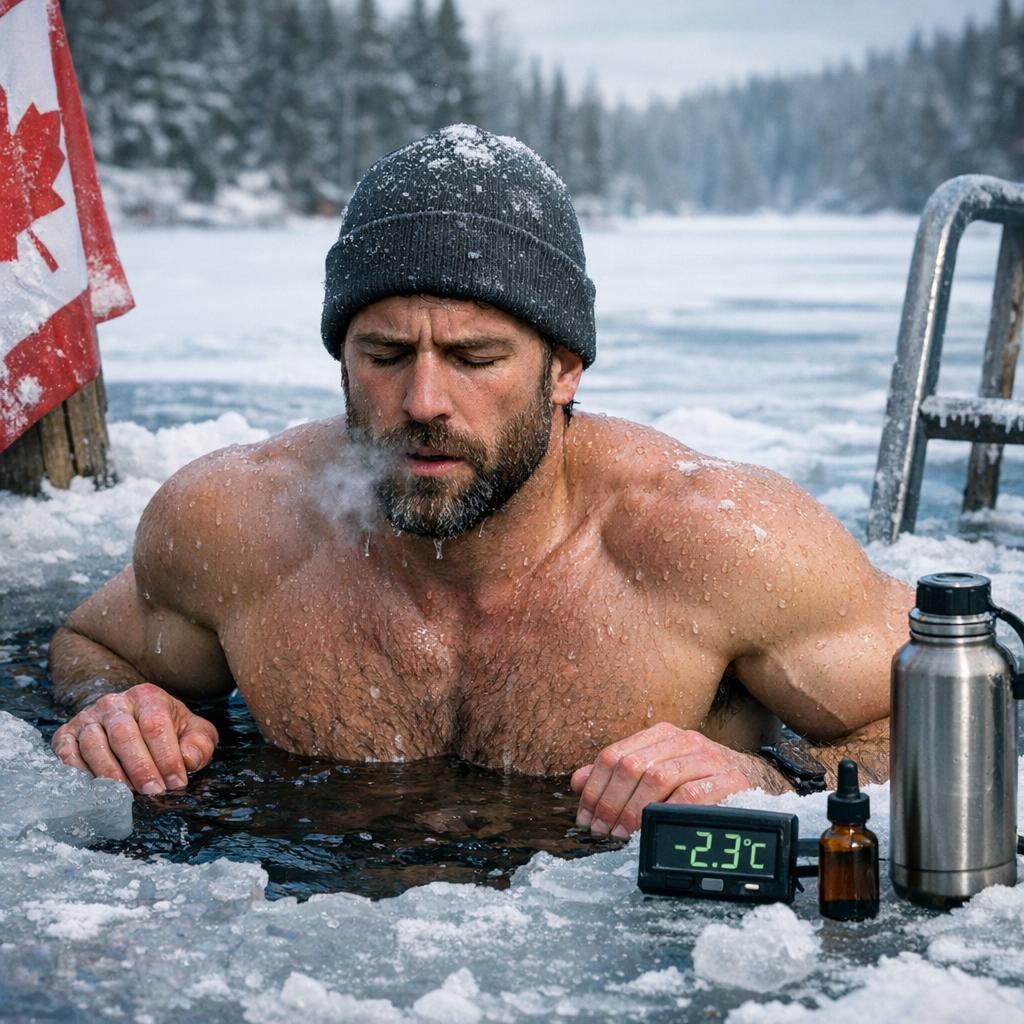
If you live anywhere from Vancouver to Montreal, you already have free access to one of the most powerful metabolic tools on the planet: long, cold seasons that prime brown adipose tissue, or brown fat, to wake up and start burning.
Human imaging studies from Scandinavian and Canadian labs show that adults with active brown fat can burn an extra 100-300 kcal per day at rest, simply by being regularly exposed to mild cold, not ice-bath extremes.
That’s the difference between slowly leaning out over a winter in Calgary and quietly adding five pounds of “I’ll cut it in the spring” fat under a hoodie.
- Metabolic boost: Regular cold exposure linked to ~10-15% increase in daily energy expenditure via brown fat activation in controlled trials
- Canadian advantage: Cities like Edmonton and Winnipeg sit below 0°C for over 100 days per year, giving you built-in exposure time
- Glucose control: Brown fat activation can improve insulin sensitivity by 20-30% in some human studies
- Time cost: Effective, enduring protocols can start with 5-10 minutes per day, using your existing shower and commute
The problem is that most “cold exposure” you see online ignores what matters for actual brown fat adaptation: temperature, duration, frequency, and your real life in a Canadian climate with work, kids, and 6 a.m.darkness.
You don’t need liquid nitrogen cryo sessions or a $2,000 plunge tub in a Toronto condo; you need a repeatable, research-backed approach you can run before work, after training, and around Health Canada’s safety guidelines.
This is where smart Canadian biohacking comes in: using the winter you already have, plus a bit of structure and tracking, to build a metabolism that works harder for you 24/7.
Why cold exposure beats another diet
Your body has two main types of fat that matter here: white fat that stores energy, and brown fat that burns it to produce heat when you’re cold.
Cold exposure and brown fat work together as a metabolic power-up that doesn’t rely on willpower around food, which is why it pairs so well with a busy schedule in Ottawa, Halifax, or Regina where meal timing is rarely perfect.
When you expose yourself to controlled cold, brown fat cells pull glucose and fatty acids out of your bloodstream, convert them to heat, and over time increase both their volume and activity.
- Higher baseline calorie burn without extra gym time
- Better blood sugar control and fewer afternoon crashes
- Improved cold tolerance for winter running, rucking, or hockey
For you, that can translate into leaner body composition, more stable energy for deep work blocks, and less dread lacing up for a freezing 5 p.m. session when the sun set at 4:30.
Instead of fighting the cold half the year, you start using it as a training tool that runs in the background of your life.
Canadian research centres in Montreal and Toronto are already using PET-CT scans to map brown fat activity in adults at different temperatures, and the take-home is clear: consistent mild-to-moderate cold, not heroic suffering, drives sustainable adaptation.
that’s good news if you’re juggling a Vancouver commute, childcare, and gym sessions and you need something you can actually stick to through February, not a 30-day masochism challenge.
How cold exposure and brown fat actually work
When skin temperature drops, your sympathetic nervous system fires, releasing norepinephrine, which binds to brown fat receptors and tells those cells to start burning fuel.
Inside brown fat, a protein called UCP1 uncouples energy production from ATP, so calories get converted directly into heat rather of stored as fat, a process that ramps up over weeks of consistent exposure.
This is non shivering thermogenesis, and in Canadian winter conditions-anything from a 10°C shower to a -5°C walk in lighter layers-you can stimulate it without teeth-chattering discomfort.
Over 4-6 weeks, imaging studies show measurable increases in brown fat volume and activity with just 1-2 hours per day of mild cold, which for most Canadians can be built into commutes, dog walks, and post-lift cooldowns.
Add consistent training and dialled-in nutrition, and cold becomes a force multiplier rather than a random stressor you only feel when scraping ice off the windshield in Saskatoon.
Estimated share of winter energy burn from brown fat
[aiomatic_charts type=”Pie” labels=”Brown fat,Other tissues” data=”15,85″ representing=”Proportion of thermogenesis sources during regular mild cold exposure” colors=”#DC2626,#1E3A8A,#991B1B,#1e40af”]
This article will walk you through how to use cold exposure and brown fat strategically in a Canadian context: what the science actually says, what Health Canada would consider reasonable risk, which protocols work in real cities and real schedules, and how to stack cold with supplements and training for maximum return.
By the end, you’ll have a clear, step-by-step cold exposure program you can start this week-no spa membership, no gimmicks, just a smart use of the climate you already live in.
once your cold exposure routine is locked in, dial in your performance stack so every hard-earned brown fat adaptation is backed by serious training, recovery, and supplementation.
Metabolic edge in Canadian cold
Brown fat is metabolically active tissue that burns calories to create heat, and cold exposure is your cheapest way to turn it on during Canadian winters.Research suggests people with higher brown fat activity can burn up to 200-300 extra calories per day in cold conditions, which adds up fast between November and March. For you, that means smarter cold exposure can tighten body composition while keeping energy and mood steady when daylight tanks.
the key is controlled stress, not ice-hero theatrics that spike cortisol and crush recovery. You want a shiver threshold that feels challenging but still lets you breathe calmly through your nose and stop without ego.Done right, cold exposure improves insulin sensitivity, raises NEAT (non‑exercise activity thermogenesis), and supports better sleep quality on those long, dark Toronto, Calgary, or Halifax nights, especially when paired with solid training and nutrition.
- Brown fat burn: Up to ~300 kcal per day in cold exposure
- Canadian window: 4-6 months of easy outdoor cold stimulus annually
- Shiver signal: Mild shivering usually begins around 1-2°C air or 12-15°C water
- Recovery risk: >15 minutes post‑workout immersion can blunt strength gains by ~10-20%
Cold activation without killing gains
You want brown fat turned on, not muscle protein synthesis turned off. Long, aggressive post‑lift ice baths can dampen hypertrophy and strength, so avoid dunking straight after your heavy sessions. Instead, use cold on off days or at least 4-6 hours after lifting when your anabolic window has had time to run its course.
For activation, think short, frequent exposures, not marathon suffering. Aim for protocols like:
- Cool outdoor walks: 10-20 minutes at -5 to 5°C with light gloves and a toque but a slightly under‑dressed torso
- Cold showers: Finish warm showers with 60-120 seconds at the coldest tap setting
- Short plunges: 8-15°C water for 2-5 minutes, 3-4 times per week, starting conservative
- Start with mild cold where you can still breathe calmly
- Stop before full‑body shaking, teeth chattering, or numb hands
- Rewarm actively with light movement, not scalding showers
- keep post‑workout cold short and moderate, or skip entirely
Weekly cold plan for busy Canadians
your schedule runs on work, transit, and short training windows, so your cold protocol needs to fit real life in cities like Vancouver or Montreal, not some influencer cabin in Muskoka. Use winter itself as your base stimulus and layer in short,targeted hits of cold that support,not sabotage,your programme. Anchor everything to your training split and your highest‑stress workdays.
A simple, sustainable framework:
- 3-4 cold exposures per week totalling 10-15 minutes of cold water or 40-60 minutes of chilly outdoor time
- 2-3 strength days with minimal or no immediate post‑lift immersion
- 1 easier “recovery day” where you can use slightly longer, calmer cold to reset your nervous system
On workdays where you’re slammed, use “micro‑doses”: step outside with minimal layers for 3-5 minutes between Zoom calls, or walk the dog without a heavy jacket down to just a hoodie. Over a Canadian winter, those tiny hits of chill add up to hours of brown fat stimulus without you blocking off extra time or fighting gym crowds for a cold tub.
Stacking cold with training and recovery
Cold exposure works best when it’s integrated into your whole system: strength work,conditioning,food,and sleep. On lifting days, prioritise your session and treat cold like a separate tool, not a finisher flex for Instagram. Such as, in a Toronto winter, lift at 6 pm, eat a protein‑heavy dinner, relax, then take a 2-3 minute cool shower before bed for nervous system down‑regulation.
Think about sequencing and fuel:
- before training: If you use cold, keep it brief (1-2 minutes) and moderate to wake up, not freeze your hands and joints
- After training: For size and strength, wait several hours before more intense cold; for pure endurance phases, post‑session cold is less of an issue
- Evening: A short, not brutal, cold shower followed by warm socks and tea can deepen sleep, especially when bedroom temperature stays cool
Relative impact of daily habits on brown fat and metabolism
[aiomatic_charts type=”Bar” labels=”Cold exposure,Strength training,Protein intake,Sleep quality” data=”30,25,20,25″ representing=”Estimated relative contribution to overall metabolic results when all are optimised” colors=”#DC2626,#1E3A8A,#991B1B,#1e40af”]
Nutrition and sleep amplify your cold gains. Aim for 1.6-2.2 g of protein per kg bodyweight, plenty of whole‑food carbs around training, and 7-9 hours of dark, cool sleep in every Canadian season. When those pillars are built,cold exposure becomes an efficient bonus lever rather of a crutch you rely on to outrun poor habits. [INTERNAL LINK: winter training nutrition]
Testing and refining your winter protocol
you don’t need a research lab in Vancouver to know if your brown fat protocol is working, but some basic metrics help you avoid spinning your wheels. In canada, most provinces give you access to baseline bloodwork through your family doctor plus private labs if you want deeper performance data. combine that with simple home tracking to dial in your personal dose of cold.
Useful lab and field markers include:
- Fasting glucose and HbA1c: Track insulin sensitivity shifts over winter
- Lipids: Triglycerides and HDL frequently enough move in the right direction with consistent cold and better habits
- Resting HR and HRV: Morning readings show if your protocol is boosting resilience or just adding stress
Across a single Canadian winter, you should see clearer hunger signals, slightly easier leanness at the same calorie intake, and better tolerance for cold commutes. if your joints ache, sleep worsens, or you dread every session, you’re overdosing. Pull back to the minimum effective dose: shorter exposures, slightly warmer water, or fewer sessions per week while keeping your training and nutrition consistent. [INTERNAL LINK: Canadian lab testing for athletes]
You already live in one of the best cold exposure environments on the planet-dial in your brown fat protocol, lock in your training and recovery, and use winter to come out leaner and stronger by spring.
What This Means For You
Turn Canadian winter into your metabolic advantage
You do not need a perfect cold plunge setup, a WHOOP band, or a health podcast playlist to start using cold exposure and brown fat to your advantage. You need a plan you will actually follow in the middle of a dark February week when you are tired, stressed, and tempted to coast.
You have already seen how targeted cold exposure, done with intent and respect for your nervous system, can recruit brown adipose tissue, increase non-shivering thermogenesis, and improve glucose handling. You have also seen that the effect is dose-dependent: studies using daily cold protocols in humans show significant upticks in brown fat activity and resting energy expenditure over 4-6 weeks, not 4-6 days.That is the gap between an Instagram experiment and a real outcome.
The advantage you have as a Canadian is simple: the environment is already doing 60% of the work for you. You just need to structure the remaining 40%.
- ☐ Finish 3 showers this week with 30-60 seconds of cold water to the upper back and chest
- ☐ Do 2 brisk outdoor walks in just a T-shirt and light gloves between 5-15°C, under 20 minutes each
- ☐ Add one deliberate cold session (lake, tub, or cold shower) where you control breath and stay 2-4 minutes
- ☐ Track sleep, hunger, and energy for 7 days so you actually see what changes
Keep your goal crystal clear. If you want fat loss, you are using brown fat activation and cold exposure as a multiplier on a solid nutrition and training base, not as a substitute. If you want performance, you are placing your colder sessions away from heavy lifting or sprint work so you are not blunting adaptation. If you want mood and resilience, you are chasing that post-cold dopamine bump without turning every morning into a willpower war.
Your body does not care about trends; it cares about consistent input.A repeatable three-day-per-week protocol in a Toronto condo shower will beat a heroic but random lake plunge in Kelowna once a month. That is how you move brown fat recruitment, resting metabolic rate, and insulin sensitivity in the direction you want rather of just collecting “hardcore” stories.
The Canadian context adds another layer: health systems and regulations. If you are pairing cold exposure with advanced bloodwork or metabolic testing, work with a practitioner who understands cold adaptation and can order the right labs through Canadian channels or private labs in major cities. When you bring data-fasting glucose, HbA1c, resting heart rate, HRV, body composition-into this, you are no longer guessing whether the cold is doing anything. You are treating your body like the performance project it is. [INTERNAL LINK: metabolic testing Canada]
Cold exposure is also scalable to your life season.New baby at home in calgary? Run 90-second cold shower finishes and 10-minute stroller walks in the chill. Long commute to a Vancouver tech job? Get off transit one stop earlier and walk in lighter clothing, then use an evening contrast shower. Training for an Ottawa marathon? Use chill morning walks and shorter cold showers on easy days, and skip hard cold exposure on your heaviest long run weeks.
Once you stop thinking in terms of “hacks” and start thinking in terms of repeatable dose, your winter stops being something you survive and becomes another lever you pull.
From here, your next step is not to grind through more research; it is indeed to run your own 4-6 week experiment. Commit to a cold exposure framework for one mesocycle, the same way you would commit to a training block. Pick start and end dates. Decide on your protocol. Choose the metrics you will track. That is how you separate signal from noise and see whether brown fat activation and cold exposure are actually pulling you toward your goals.
Over that block, adjust based on feedback, not feelings. If your sleep tanks, back off frequency or intensity. If recovery markers and mood improve, earn the right to raise the dose slightly. Remember that the real win is not surviving another brutal ice bath; it is indeed building a nervous system that can handle sudden shock and settle quickly, a metabolism that does not panic at the first calorie change, and a mindset that does not fold when things get uncomfortable.
You do not need more motivation for this. You already train, you already work, you already grind through Canadian winters. Layering structured cold exposure and brown fat activation on top of that lifestyle is just about precision: better timing, clearer intent, and ruthless consistency.
The last piece is honesty. If you are pairing these protocols with performance enhancers, you need to treat your body like a high-output system, not a disposable one. That means respecting recovery, staying on top of bloodwork, tracking how stacking cold stress with pharmacological stress feels, and making adjustments before things get messy. You are not just chasing leanness or PRs; you are building a system that will still be powerful in ten years, not just ten weeks. [INTERNAL LINK: recovery strategies]
Cold exposure and brown fat are not magic. They are force multipliers. Used right, they let you squeeze more performance, more leanness, and more resilience out of the same 24 hours you already have. Used randomly, they are just another stressor in a life that is already busy and overclocked.
The environment is not changing. January in Montreal is still going to feel like January in Montreal. The chance is that you can change how your body and brain respond to that environment-and once you see winter as an ally instead of an obstacle, every cold walk to the gym or icy shower becomes one more rep in your corner.
If you are ready to pair smart cold exposure with a performance-focused supplement stack, dial in your next phase with tools built for serious Canadian lifters.
🔗 Related on Steroids Canada