
Bloodwork is the only way to see what a compound is doing inside you before you feel it. The core panel covers hormones, blood count, cholesterol, liver and kidneys.
- Test before you start (baseline), part way through, and after you stop.
- In Canada, ask your family doctor for a requisition or pay privately at LifeLabs or Dynacare.
- Hematocrit, HDL cholesterol and liver enzymes are the results most likely to change.
Most health problems from anabolic steroids build silently: thicker blood, worse cholesterol, stressed liver, higher blood pressure. You will not feel any of it until it is a problem. A few vials of blood every couple of months tell you far more than how you feel in the gym.
When to test
- Baseline: two to four weeks before you start. Without it you cannot tell what has changed.
- Mid-point: about six to eight weeks in, once levels have settled. With injectables, test just before your next injection (the “trough”).
- After: about six to twelve weeks after you stop, to confirm your natural hormones and other markers are returning to baseline.
The core panel
| Test | What it tells you | What to watch |
|---|---|---|
| Total testosterone | Hormone level (Canadian labs report nmol/L) | Normal adult male range is roughly 8–35 nmol/L, lab-dependent |
| LH and FSH | Whether your brain is still signalling your testes | Near zero during use, should recover after |
| Estradiol (sensitive) | Estrogen made from testosterone | Very high or very low both cause symptoms |
| Complete blood count | Hemoglobin and hematocrit | Doctors pause testosterone above about 54% hematocrit |
| Lipid panel | HDL, LDL, triglycerides | HDL often drops sharply, especially with orals |
| ALT, AST, GGT, bilirubin | Liver stress | Oral steroids raise these most |
| Creatinine, eGFR | Kidney function | Heavy training can raise creatinine slightly |
| PSA (men over 40) | Prostate | Rising values need a doctor’s review |
Add prolactin if you use nandrolone or trenbolone, fasting glucose or HbA1c if you use growth hormone or have a family history of diabetes, and thyroid (TSH) if you use T3.
How to get tested in Canada
Through your doctor
Your family doctor or a walk-in clinic physician can order tests on a requisition, and most are covered by your provincial health plan. Doctors are bound by confidentiality. Telling them what you are using lets them interpret results properly and does not get reported to police. If you do not have a family doctor, virtual clinics in most provinces can order bloodwork.
Paying privately
Without a requisition, you can pay out of pocket. LifeLabs serves Ontario, British Columbia and Saskatchewan, and Dynacare serves Ontario, Quebec and Manitoba. Both sell individual tests and panels online and at their patient service centres. Costs vary by test, from tens of dollars for a basic panel to a few hundred for a full hormone workup. Some Alberta and Atlantic regions have fewer private options, so check with the local lab.
Reading your results
Lab ranges are built from the general population, so “in range” is a starting point, not a guarantee. Look at the direction of change from your baseline. A hematocrit that climbs from 44% to 52% matters even though 52% is still in range. If anything is flagged as high or low, show it to a doctor rather than guessing.
Keep your own record
Labs and doctors only see a snapshot. Keep a simple spreadsheet or notes file with the date of each test, every result, what you were using at the time (product, strength, how much and how often), your weight, and your blood pressure readings. Over a year or two this becomes the most useful health document you own. Patterns jump out: HDL that falls every time an oral is added, hematocrit that creeps up each run, a liver enzyme that never quite returns to baseline. It also means any doctor you see, including at a walk-in clinic or an emergency department, can understand your history in a few minutes instead of guessing.
LifeLabs and Dynacare both offer online accounts where your results are stored, which makes downloading and comparing past tests easy.
Beyond the blood test
Bloodwork does not show everything. Check your blood pressure at home or at a pharmacy kiosk weekly. Shoppers Drug Mart, Rexall and most Canadian pharmacies have free machines. Watch your resting heart rate, sleep and mood too. If you use oral steroids, our liver support guide covers what helps and what does not, and our article on steroids and cholesterol explains the heart side.
Product pages on SteroidsCanada list the bloodwork most relevant to each compound under “Bloodwork,” so you can check before you order.
Frequently asked questions
Can I get bloodwork without a doctor in Canada?
Yes. LifeLabs and Dynacare sell self-pay tests online and at their centres in several provinces. Using your doctor is usually cheaper because most tests are covered by your provincial plan.
When should I test on injectable testosterone?
Test just before your next injection, at the low point, about six to eight weeks after starting so levels have settled.
Will my doctor report me for using steroids?
No. Doctors in Canada are bound by patient confidentiality, and personal possession of steroids is not a criminal offence. Being honest helps them read your results correctly.
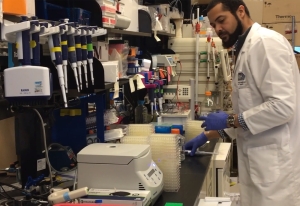
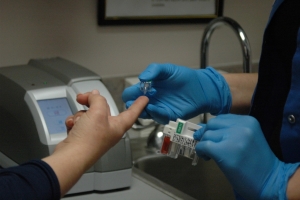
Photo: U.S. Navy Medicine, rawpixel (public domain).
General health information, not medical advice. Lab reference ranges differ between LifeLabs, Dynacare and hospital labs; always interpret results with a health professional.
Related on Steroids Canada