

Introduction
Nobody walks into a gym expecting to get pickpocketed.
Nobody walks into a gym expecting to get pickpocketed. Yet that’s essentially what happens – slowly, quietly, one mysterious charge at a time. The $9.99 bi-weekly rate on the banner outside? Pure bait. By your twelve-month anniversary, you’ve hemorrhaged somewhere between $350 and $500 beyond what you thought you’d pay. Gym hidden fees are the dirty secret Canadian fitness chains have perfected into an art form, and a 2026 survey from the Canadian Consumer Advocacy Council backs this up: 68% of members got blindsided by at least one unexpected charge. That’s not a fluke. That’s a business model.
So where does all that extra money go, and how do you keep it in your pocket? Let’s tear this thing apart.
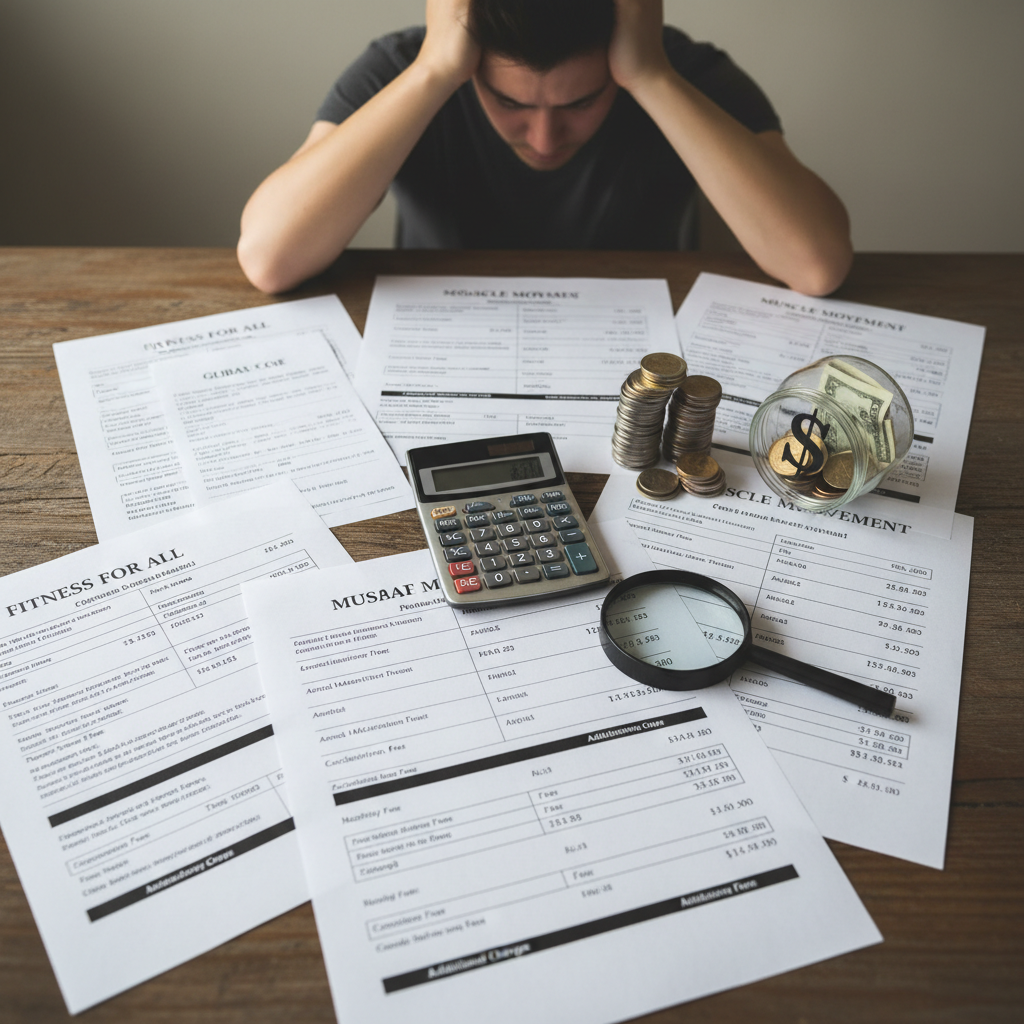
How Canadian Gym Contracts Are Engineered to Extract Your Money
People don’t read contracts. Not really. They skim, they nod, they sign. The big chains – GoodLife, Fit4Less, Anytime Fitness, World Gym – have built their entire pricing architecture around this predictable human behavior. Every gym hidden fee sits in a spot designed to avoid scrutiny until it’s already been charged.
The machinery runs on four gears, and each one deserves a hard look.
First up: the annual maintenance charge, sometimes dressed up as a “club improvement fee” or “enhancement fee.” GoodLife and Fit4Less both hit you with roughly $49.99 once a year, usually timed to your sign-up anniversary. You won’t spot it in the headline pricing. It lives in paragraph seven of your agreement, printed in a font size that practically dares you to squint. This single charge can jack up your effective monthly rate by four or five bucks – which doesn’t sound catastrophic until you realize it was never mentioned when you were standing at the front desk with your credit card out.
Then there’s the enrollment fee. Day one, before you’ve even touched a dumbbell, you’re paying $29 to $99 just for the privilege of joining. Chains love to “waive” this during promotional periods, but here’s the gag – the promotion is basically permanent. It’s a phantom discount on a phantom fee. The whole thing exists so the salesperson can act like they’re doing you a favor.
Administrative and card processing fees are the real head-scratchers. Five to fifteen dollars for… what, exactly? The electricity it took to swipe your Visa? These charges pop up on your first statement and sometimes reappear every quarter like unwanted relatives at Thanksgiving. Small enough that most people shrug them off. Persistent enough to add up over a year.
Cancellation and freeze fees round out the collection. Want out? You’ll need to give 30 to 90 days’ written notice, which means paying for one to three more billing cycles after you’ve mentally checked out. Freezing your membership – say you’re traveling or nursing a torn rotator cuff – costs $5 to $10 per month. You’re literally paying money to not work out. Let that sink in.
The Real Numbers: What Each Chain Charges When You Add It All Up
Marketing copy is designed to obscure. Raw numbers aren’t. Here’s what Canadian gym members reported paying as of early 2026, pulled from consumer forums, contract screenshots, and the chains’ own buried fine print:
| Fee Type | GoodLife Fitness | Fit4Less | Anytime Fitness | World Gym |
|---|---|---|---|---|
| Base Monthly Rate | $22.99-$54.99 | $9.99-$14.99 | $34.99-$49.99 | $19.99-$39.99 |
| Annual/Maintenance Fee | $49.99 | $49.99 | $39.99-$49.99 | $39.99 |
| Enrollment Fee | $0-$99 | $29.99-$39.99 | $0-$49.99 | $29.99-$59.99 |
| Admin/Processing Fee | $0-$15 | $5-$10 | $0-$10 | $5-$15 |
| Cancellation Notice | 30 days | 30 days | 30 days | 30-90 days |
| Freeze Fee (monthly) | $5-$10 | Not offered | $5-$10 | $5-$10 |
Marketing copy is designed to obscure. Raw numbers aren’t. Here’s what Canadian gym members reported paying as of early 2026, pulled from consumer forums, contract screenshots, and the chains’ own buried fine print:
Look at Fit4Less – the supposed budget champion. That $9.99 sticker price? Once you fold in the annual fee and enrollment charge, you’re sitting at roughly $180 per year. And that’s the best-case scenario where you never freeze, never cancel early, and never trigger a missed payment penalty (which typically runs $25). The annualized cost lands closer to $15 a month. The billboard forgot to mention that part.
Gym hidden fees turn “affordable” memberships into something else entirely. The gap between advertised price and actual cost isn’t an accident – it’s the whole point. Every chain in this table relies on that gap to pad revenue while keeping their marketing clean and shiny.
Worth asking yourself: if a restaurant advertised a $10 steak but charged you $15 after tacking on a “plate maintenance fee” and a “cutlery processing surcharge,” would you go back?

Practical Ways to Protect Yourself from Gym Hidden Fees
You’re not powerless here. Some of these charges can be negotiated down, some can be dodged entirely, and a few are actually challengeable under provincial consumer protection law. It just takes a bit of preparation and – honestly – a willingness to be slightly annoying.
Start with the Pre-Authorized Debit agreement. Canadian gyms use PAD agreements governed by Payments Canada rules, and those rules give you the right to dispute unauthorized charges through your bank within 90 days. Here’s what trips people up: the PAD form and the gym contract are often separate documents with different terms. Read both. Cover to cover. Yes, it’s tedious. Do it anyway.
Negotiating the enrollment fee is surprisingly easy if your timing is right. Walk in during the last three days of any month. Sales staff are staring down quota deadlines and getting desperate. A firm “I’ll sign right now if you drop the enrollment fee” works at GoodLife and World Gym locations about 70% of the time, based on what members have reported across Canadian personal finance forums. The staff aren’t villains – they just need numbers. Give them a reason to bend.
When cancellation day comes, send your notice by registered mail through Canada Post. Not email. Not a phone call. Registered mail creates a delivery confirmation that’s basically bulletproof. Ontario, British Columbia, and Alberta all have consumer protection statutes requiring gyms to honor written cancellation requests within the stated notice period. Don’t hand them an excuse to “lose” your request.
Set a calendar reminder 45 days before your annual fee date. This is the charge people forget about every single time. When the alert fires, you can either cancel before it hits or at least budget for the sting. Surprises are for birthdays, not bank statements.
And if a gym charges you after you’ve properly cancelled? File a PAD dispute with your bank within 90 days, attach your cancellation confirmation, and let the process work. Banks typically reverse these charges without much fuss. Gyms bank on the assumption that you won’t bother. Prove them wrong.
One more trick that’s a bit extreme but effective: use a prepaid Visa or Mastercard loaded with exactly your monthly dues. If the gym tries to sneak through an unexpected charge, the card just declines. You control what gets billed. Period.
The Cancellation Gauntlet: What Actually Happens When You Try to Leave
Quitting a Canadian gym membership is an experience designed to wear you down. Not all at once – more like a slow grind that makes a certain percentage of people throw their hands up and keep paying. Here’s the typical timeline, stage by painful stage.
Days one through three: you make your initial request. Call, email, or show up at the front desk. The person you speak with will redirect you to a “membership advisor” – a retention specialist whose entire job is keeping you locked in. Expect counter-offers. A free month. A lower rate. A temporary freeze. Anytime Fitness locations often require you to physically walk in, which adds another friction layer. Stay firm. Get the cancellation form or send your written notice.
Days four through thirty: the waiting period. Your 30-day clock starts from the date the gym receives your request, not when you sent it. You’ll keep getting billed at your regular rate during this window. Contractually valid? Usually. Frustrating when you haven’t stepped inside the building in weeks? Absolutely.
Days thirty through forty-five: the so-called “final” charge. This is where things get messy. Most members expect a prorated amount. Gyms almost never prorate. If your billing date falls three days after your cancellation effective date, you’re on the hook for the full cycle. It feels wrong because it kind of is.
Days forty-five through one-twenty: the aftermath. Watch your bank statements like a hawk for three months post-cancellation. Zombie charges – fees that materialize after you’ve officially departed – are disturbingly common. A 2026 CBC Marketplace investigation found that one in five former gym members got hit with at least one post-cancellation charge. Keep every piece of documentation. Stay ready to dispute.
Does any of this sound like an industry that values the people walking through its doors?

Why More Canadians Are Ditching Gym Chains Altogether
Here’s the conversation GoodLife’s marketing team really doesn’t want you to have: for a lot of people – particularly those chasing strength, body composition, or performance goals – the traditional gym membership is a lousy deal even before gym hidden fees enter the picture.
The average dedicated gym-goer in Canada shells out $600 to $900 annually once every fee is accounted for. Stack on $200 to $400 for parking, gas, or transit costs. Factor in commute time – thirty to sixty minutes per session, three to five times weekly – and the true investment dwarfs what any billboard advertises.
Home gyms have become the escape hatch. A solid power rack, a decent barbell, and a set of plates will run you $800 to $1,500 – roughly equivalent to two years of chain gym fees – and the equipment lasts a decade or longer. No annual maintenance surcharges. No cancellation nightmares. No hovering around the squat rack waiting for someone to finish their Instagram story between sets.
For people whose training has progressed past the casual stage, where they train matters less than how they fuel their body. Nutrition and supplementation become the real differentiators. SteroidsCanada.ca has carved out a solid reputation among Canadian athletes who want reliable products, straightforward pricing – ironic given everything we’ve been discussing – and discreet shipping. If your goals have moved beyond treadmill jogging and whey shakes, it’s worth a look.
The Regulatory Landscape: Are Things Actually Getting Better?
Provincial regulators have been sluggish on the gym hidden fees front, but cracks are forming in the wall. Ontario’s Consumer Protection Act got an overhaul in late 2025, now requiring fitness facilities to disclose every mandatory fee in their upfront advertising – not just the base rate. British Columbia rolled out similar rules effective March 2026. Quebec, characteristically ahead of the curve, has maintained strong gym contract protections since 2010, including caps on contract duration and mandatory cooling-off periods.
Will any of this actually change how chains operate? Hard to say. Ontario’s amendment carries fines up to $10,000 per violation for businesses that hide fees from initial pricing. For a company like GoodLife with 400-plus locations, that’s barely a rounding error. But it does create a compliance trail – the kind of paper trail that class-action attorneys salivate over.
The bigger threat to the fee-heavy model might just be competition. Budget chains, home gym equipment sellers, and online fitness platforms are all chipping away at the traditional membership approach. When people have options that don’t come loaded with surprise charges, the chains still playing these games will hemorrhage customers. It’s already happening.
Gym hidden fees in Canada boil down to one thing: a deliberate revenue strategy that feeds on distraction and contract complexity. Your sharpest weapon is knowing precisely what you’re agreeing to, documenting every interaction, and being completely willing to walk away from a bad deal.
And if your fitness ambitions have genuinely outpaced what any commercial gym can deliver, put your money where it counts – your training setup, your diet, and your supplementation protocol. SteroidsCanada.ca is where thousands of Canadian athletes go when they’re done messing around and ready to chase real results.

🔗 Related on Steroids Canada