


Introduction
Nobody tells you about this part.
Nobody tells you about this part. You’ve sorted your visa, survived the flight, maybe found a place to crash – and now you’re lying awake wondering where on earth you’re going to work out. Over 400,000 permanent residents touched down in Canada in 2025, with 2026 projections looking nearly identical according to Statistics Canada. That’s hundreds of thousands of people hunting for a gym for newcomers while still learning which transit line goes where. The Canadian fitness landscape throws curveballs that catch people off guard: contracts that feel like mortgages, pricing that nobody explains upfront, and an overwhelming buffet of options stretching from dirt-cheap warehouse gyms to sleek boutique studios charging luxury-car-lease prices. This piece cuts through all of it – what’s worth your money, what’s a trap, and how to land somewhere you’ll still be happy with come spring.

The Stakes Are Higher Than a Monthly Fee
Most people who’ve just arrived don’t realize Canadian gym memberships can feel like quicksand. Facilities routinely lock members into year-long deals, and the cancellation clause? Buried deep enough that you’d need a magnifying glass and a lawyer’s patience to find it. Walking away early might set you back $50 to $200 depending on where you live – and consumer protection laws shift between provinces, so a contract that’s perfectly legal in Ontario could violate regulations in Alberta.
Here’s the part that sounds cheesy until you live it: your gym becomes a social anchor. The Canadian Fitness Industry Council ran a survey in 2023 showing that 38% of regular gym members formed at least one genuine friendship through their facility. When your entire social world is your roommate and the cashier at Shoppers Drug Mart, that statistic hits different.
Money, obviously, is the other piece. Monthly memberships swing wildly – as low as $10 at places like Fit4Less, north of $80 at premium spots like Equinox. The national average hovers around $45 to $55 per month in 2026. Doesn’t sound brutal until you stack it against your phone bill, transit pass, and grocery receipts that somehow always come out 20% higher than you budgeted for.
The fix? Treat picking a gym for newcomers with the same intensity you’d bring to apartment hunting. Read everything. Compare aggressively. Sign nothing on impulse.
What Makes Gym Selection Trickier When You've Just Landed
Choosing a fitness facility in a
Four factors deserve your full attention.
Getting there and back – realistically.
Canadian cities sprawl in ways that can shock people from denser countries.
Language and feeling understood.
English dominates most Canadian gym chains, with Quebec being the obvious exception where French runs the show.
The fine print on your wallet.
Three pricing models dominate: month-to-month, annual contracts, and prepaid annual deals.
What the space actually feels like
Instagram photos lie.
Smart Moves for Any Newcomer Evaluating a Gym
Strategy beats guesswork every time. These pointers come from patterns – the same mistakes newcomers keep making and the shortcuts that consistently pay off.
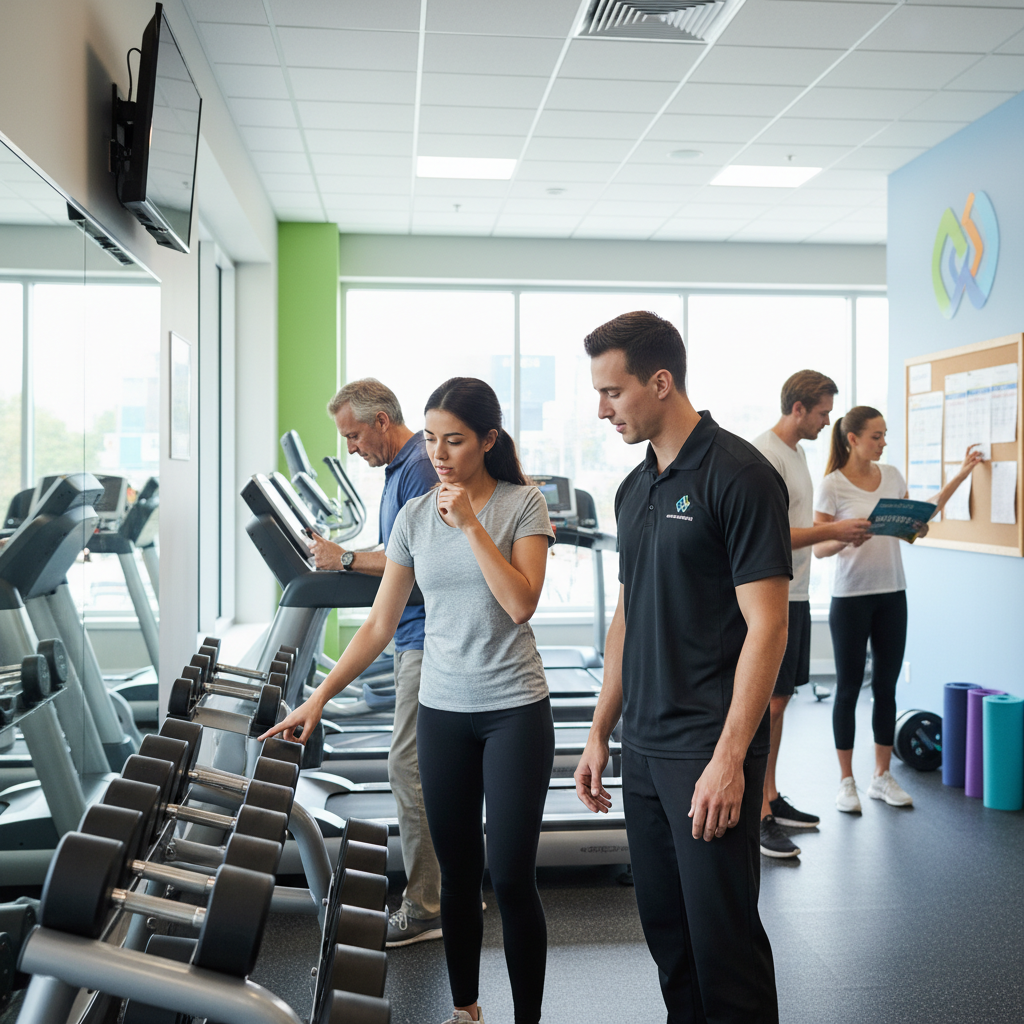
Practically every gym in Canada dangles a free trial. GoodLife Fitness offers up to seven days. Use all of them. Every single one. Go at different times. Strike up conversations with members. Test the showers, check the water pressure, see if the soap dispensers are actually full. One visit is meaningless – it’s like judging a restaurant by a single appetizer.
Life after immigration is chaotic in ways you can’t predict. Maybe you need to fly home for a family emergency, or a job offer pulls you to another city entirely, or your housing falls through. Many gyms let you freeze your membership for one to three months annually, but the specifics vary enormously. Some charge a $10 monthly holding fee during the pause; others waive it entirely. Get that policy on paper before your signature touches anything.
Municipal recreation centres deserve way more attention than they get. Cities like Toronto, Edmonton, and Ottawa operate public fitness facilities with monthly passes between $25 and $45 – significantly less than private gyms. Equipment is generally solid, and you often get pool and track access thrown in. No sales pitch, no pressure. The downside? Older machines, fewer bells and whistles, and hours that might not suit shift workers.
About 30% of Canadian employers with 50 or more staff include some kind of wellness benefit covering gym costs partially or completely. If you’ve already started working, dig into your benefits package before spending out of pocket. Certain insurers reimburse up to $500 a year for fitness expenses. That’s real money sitting on the table.
One more thing – and this one’s critical for a gym for newcomers: don’t sign up on your first visit. “This rate disappears today” is almost always a bluff. Walk out, compare two or three other places, sleep on it. The deal will be waiting when you come back. It always is.
Your First Three Months: What the Adjustment Arc Looks Like
Settling into a gym in a brand-new country follows a pattern. Knowing it ahead of time keeps you from bailing prematurely.
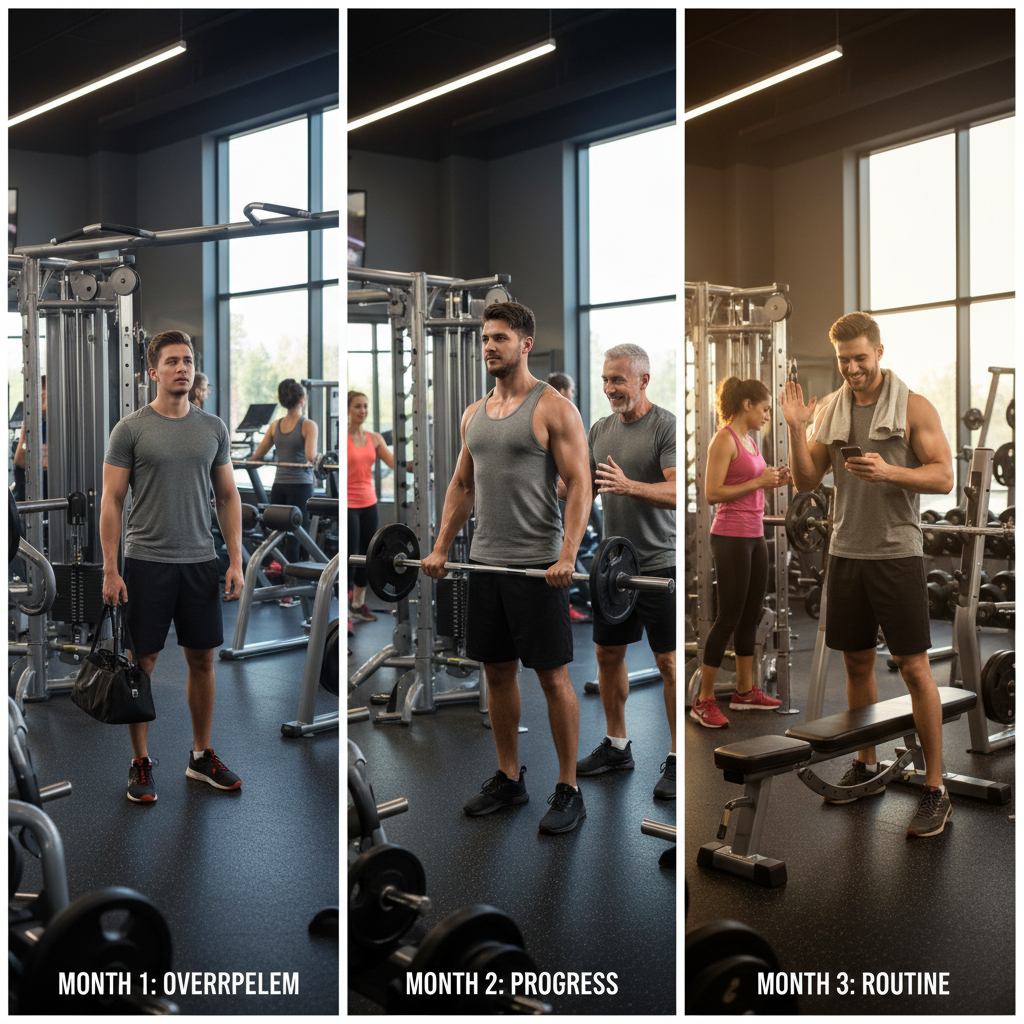
Weeks one and two feel disorienting. You’re figuring out locker systems (bring your own padlock – most Canadian gyms don’t provide them), absorbing unwritten rules like wiping down every machine after use and not camping on equipment during busy hours, and adjusting to indoor temperatures. Gyms here typically sit around 18 to 20°C, which can feel genuinely cold if you grew up somewhere tropical. Layer up for the walk there; strip down once you’re warmed up.
By weeks three and four, a rhythm starts forming. You’ve found your preferred time slot, claimed your favourite corner, maybe stumbled into a group class that doesn’t make you want to disappear. This is also when irritations crystallize – the parking nightmare, the locker room bottleneck at 6 PM, that one trainer who won’t stop pitching personal training sessions. Pay close attention to whether these annoyances feel manageable or deal-breaking. Your gut knows.
Month two brings the social layer. Familiar faces start registering. You’ve exchanged nods with the person who’s always hogging the rowing machine when you walk in. Canadian gym culture tends toward friendly but reserved – people won’t typically approach you first. If connection matters to you, group fitness classes are the fastest route in. CrossFit boxes and martial arts gyms build the tightest communities, while big-box chains lean more anonymous by nature.
At the three-month mark, you’ve got enough evidence to make a real call. Is this place actually helping you hit your targets? Can you sustain the commute through bad weather? Does the cost make sense against what you’re getting? If any answer comes back negative, now’s your window – many annual contracts include a 90-day early exit option (check your specific paperwork). Don’t cling to a bad choice just because you already paid into it. Switching early beats nine months of resentment.
Breaking Down Canadian Gym Types: What You're Really Paying For
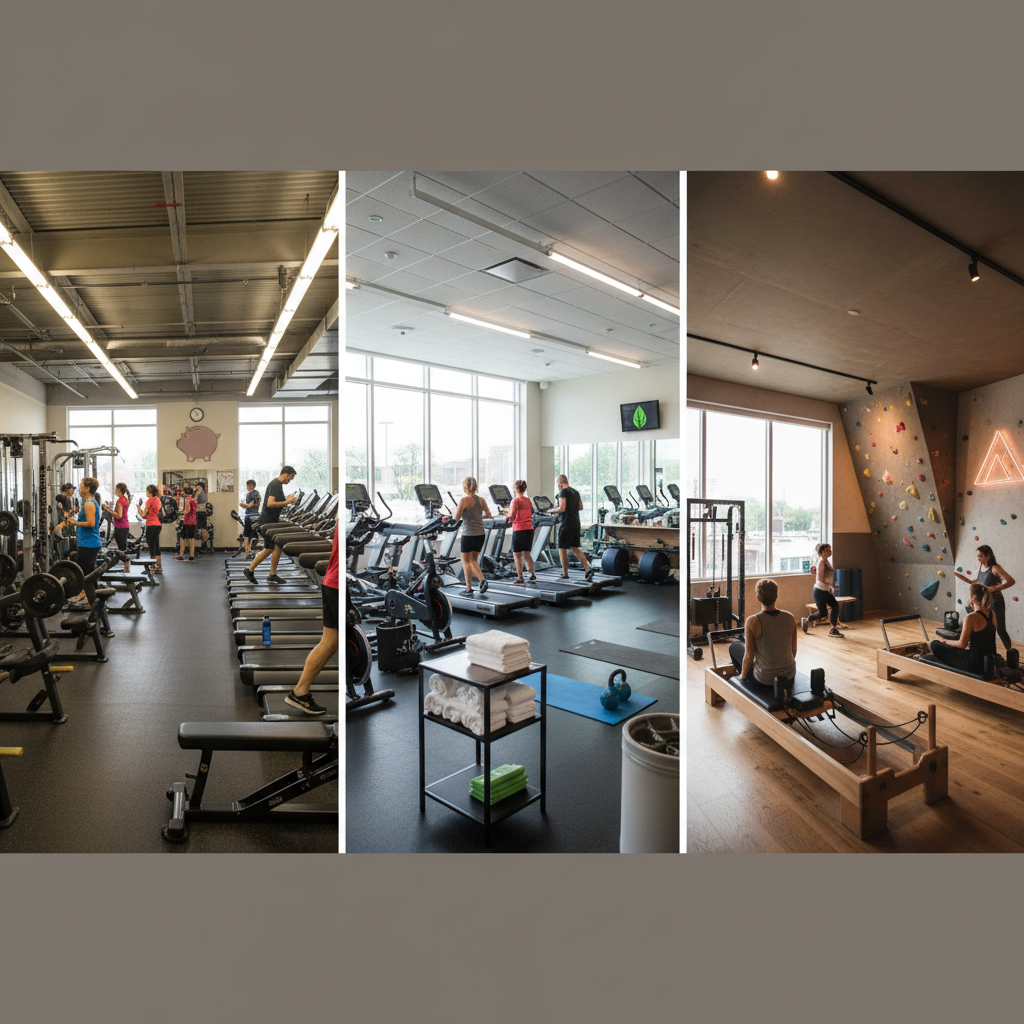
Not every facility serves the same purpose. Here’s a blunt comparison of what’s out there across most Canadian cities in 2026:
| Gym Type | Monthly Cost (CAD) | Contract Length | Ideal For | Watch Out For |
|---|---|---|---|---|
| Budget Chain (Fit4Less, Planet Fitness) | $10-$25 | Month-to-month or annual | Basic cardio and machines, tight budgets | Sparse free weights, packed during peak hours |
| Mid-Range Chain (GoodLife, Movati) | $40-$65 | Typically 12 months | Equipment variety, group classes, multi-location access | Aggressive sales culture, surprise fees |
| Premium Club (Equinox, Adelaide Club) | $80-$200+ | Typically 12 months | Luxury amenities, spa access, networking | Eye-watering cost, limited locations |
| Municipal Rec Centre | $25-$45 | Monthly pass | Affordability, pools, family access | Aging equipment, restricted hours |
| Boutique Studio (F45, Barry's, yoga studios) | $150-$300 | Class packs or monthly | Focused training, tight-knit community | Narrow scope, steep per-session cost |
| CrossFit Box | $150-$250 | Monthly | Coaching, camaraderie, structured programs | Can intimidate beginners, injury risk with poor coaching |
Not every facility serves the same purpose. Here’s a blunt comparison of what’s out there across most Canadian cities in 2026:
What no table captures is atmosphere. A scrappy $15-a-month spot buzzing with energy will outperform a sterile $100-a-month club every time. Trust what you felt during your trial – not what the brochure promised.
For anyone serious about their training goals – whether that’s putting on muscle, cutting fat, or preparing for competition – the gym handles only half the equation. Nutrition and supplementation carry equal weight. If you’re looking for reliable fitness supplements and performance products tailored to the Canadian market, SteroidsCanada.ca has earned a strong reputation. Their selection runs deep, shipping stays discreet, and they genuinely understand what people training in this country need.
Surviving Your First Canadian Winter Without Losing Momentum
Here’s what the welcome packet conveniently leaves out: winter in this country will wage war on your gym habit. Winnipeg, Ottawa, Edmonton – these cities routinely plunge to -25°C or colder between December and February. That 15-minute stroll to the gym? It transforms into a brutal, face-stinging expedition. Driving isn’t much kinder when roads turn to skating rinks and your car demands ten minutes of idling before it’ll cooperate.
This is precisely why proximity matters so much when choosing a gym for newcomers. Picked a spot within a five-minute walk or right on your transit line? You’ll keep showing up through the worst of it. Didn’t? January will expose that miscalculation fast and without mercy.
Cold-weather survival tactics that actually work: keep a packed gym bag stationed by your front door permanently. Buy real winter boots for the commute and swap into training shoes once you arrive. If you drive, a gym with underground parking becomes a genuine luxury worth seeking out. And if you catch yourself skipping sessions because of weather, consider picking up some basic home workout gear – not as a replacement, but as a backup plan for the truly savage days.
Your body responds to winter training differently than you might expect. Dry indoor air, shrinking daylight, and vitamin D deficiency – which hits roughly 40% of the Canadian population during winter months – all drag on your recovery and energy. Smart supplementation stops being optional and starts being essential. Check out SteroidsCanada.ca for products that keep your training on track through every season – they’ve built trust within the Canadian fitness community by understanding exactly what both serious athletes and everyday gym-goers need to stay consistent year-round.
Picking a gym for newcomers isn’t really about treadmills and dumbbells at the end of the day. It’s about carving out one space in your new life where you feel capable, grounded, and maybe – eventually – like you belong. Get this choice right and the rest of settling in feels a little less overwhelming. Take your time with it. Ask the uncomfortable questions. And never, ever let someone rush you into signing something you haven’t read cover to cover. Twice.
🔗 Related on Steroids Canada