
Testosterone is the hormone most first-time users start with because it is the best studied, the easiest to monitor with bloodwork, and the one your body already makes. That does not make it risk-free.
- Medical replacement uses about 75–100 mg a week; anything above that is beyond what doctors prescribe.
- Get bloodwork before, during and after, through your doctor or privately at LifeLabs or Dynacare.
- Any outside testosterone shuts down your own production for a while, and recovery is not guaranteed.
Most people who ask about a “first cycle” have already made up their mind to try something. This guide is not going to talk you out of it, and it is not going to hand you a protocol either. It covers what you need to understand before you start, so that whatever you decide, you decide with your eyes open.
Why testosterone comes first
Testosterone has been prescribed in Canada for decades, so its effects, side effects and safe monitoring are well documented. Because it is the hormone your body already makes, bloodwork tells you exactly where you stand. That is not true of most other compounds, which do not show up on a standard testosterone test. If something goes wrong, a doctor also knows what they are looking at.
Testosterone comes as different esters, which only change how fast it is released:
- Enanthate and cypionate are slow esters with a half-life of about 4–5 days, the forms most often prescribed. See testosterone enanthate and testosterone cypionate.
- Propionate is fast, clears in about a day, and has to be injected far more often.
- Blends such as Sustanon 250 mix fast and slow esters.
Dose: what medicine considers normal
Those numbers aim to bring a man with low levels back into the normal range of roughly 10–35 nmol/L. Anything above that is a supraphysiological dose: more effect on muscle, and more of every side effect listed below. Side effects scale with dose, which is why people who end up with serious problems are rarely the ones who stayed close to medical doses.
What to expect in the first weeks
Changes are gradual. Most people notice better recovery, appetite and mood within a few weeks, and strength and size over the following weeks as training and food catch up. Some of the early scale gain is water. Testosterone does not replace training or eating well; it amplifies them. People with poor sleep and inconsistent training are usually disappointed.
Bloodwork: before, during and after
In Canada, the easiest route is your family doctor, who can order tests on a requisition covered by your provincial plan. If you prefer not to, LifeLabs (Ontario, BC, Saskatchewan) and Dynacare (Ontario, Quebec, Manitoba) both offer self-pay testing.
| Test | Why |
|---|---|
| Total testosterone, LH, FSH | Your natural baseline and how much it is suppressed |
| Estradiol | Testosterone converts to estrogen; high levels cause water retention and breast tissue |
| Complete blood count (hematocrit) | Testosterone thickens the blood. Doctors stop treatment above about 54%. |
| Lipid panel | HDL (“good”) cholesterol usually falls |
| ALT, AST, creatinine, PSA | Liver, kidney and prostate baseline |
Our full guide to bloodwork for steroid users in Canada explains timing and what the results mean.
Side effects to know
- Thicker blood. Raised hematocrit increases clot and stroke risk. It is the most common reason doctors pause therapy.
- Estrogen effects. Water retention, sore or swelling nipples (gynecomastia).
- Acne and oily skin, especially on the back and shoulders.
- Hair loss if you are genetically prone to male-pattern baldness.
- Blood pressure and cholesterol changes that matter over years.
- Shrinking testicles and lower sperm count. Outside testosterone switches off your own production and can cause temporary infertility.
Coming off: natural recovery
While you use testosterone, your brain stops sending the LH and FSH signals that tell your testes to work. After you stop, it can take weeks to months for that to restart, and you can feel flat, tired and low on libido in the gap. Doctors sometimes prescribe clomiphene, tamoxifen or HCG off-label to speed recovery. Our guide to Nolvadex explains how these drugs work. Recovery is not guaranteed, particularly after long or repeated use.
Is a prescription an option?
If you have genuine symptoms of low testosterone, it is worth asking a doctor first. Prescribed testosterone is legal, covered by some drug plans, and comes with monitoring built in. Our article on TRT vs steroid cycles compares the two paths.
Frequently asked questions
Which testosterone is best for a beginner?
Slow esters like enanthate or cypionate are the most studied and need the fewest injections. They are the forms Canadian doctors prescribe most often.
How much testosterone do doctors prescribe?
Usually about 75–100 mg a week, adjusted so blood levels sit in the normal range. Higher amounts are beyond medical use and raise every side effect.
Will my natural testosterone come back?
In most healthy young men it does, over weeks to months, but it is not guaranteed. Longer and repeated use makes recovery slower and less certain.
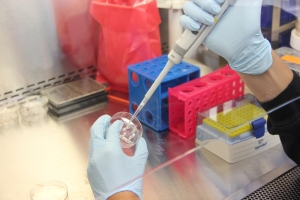
Photo: rawpixel (public domain).
General information for adults, not medical advice. Testosterone is a prescription drug in Canada; talk to a doctor about your health before using it.
Related on Steroids Canada