

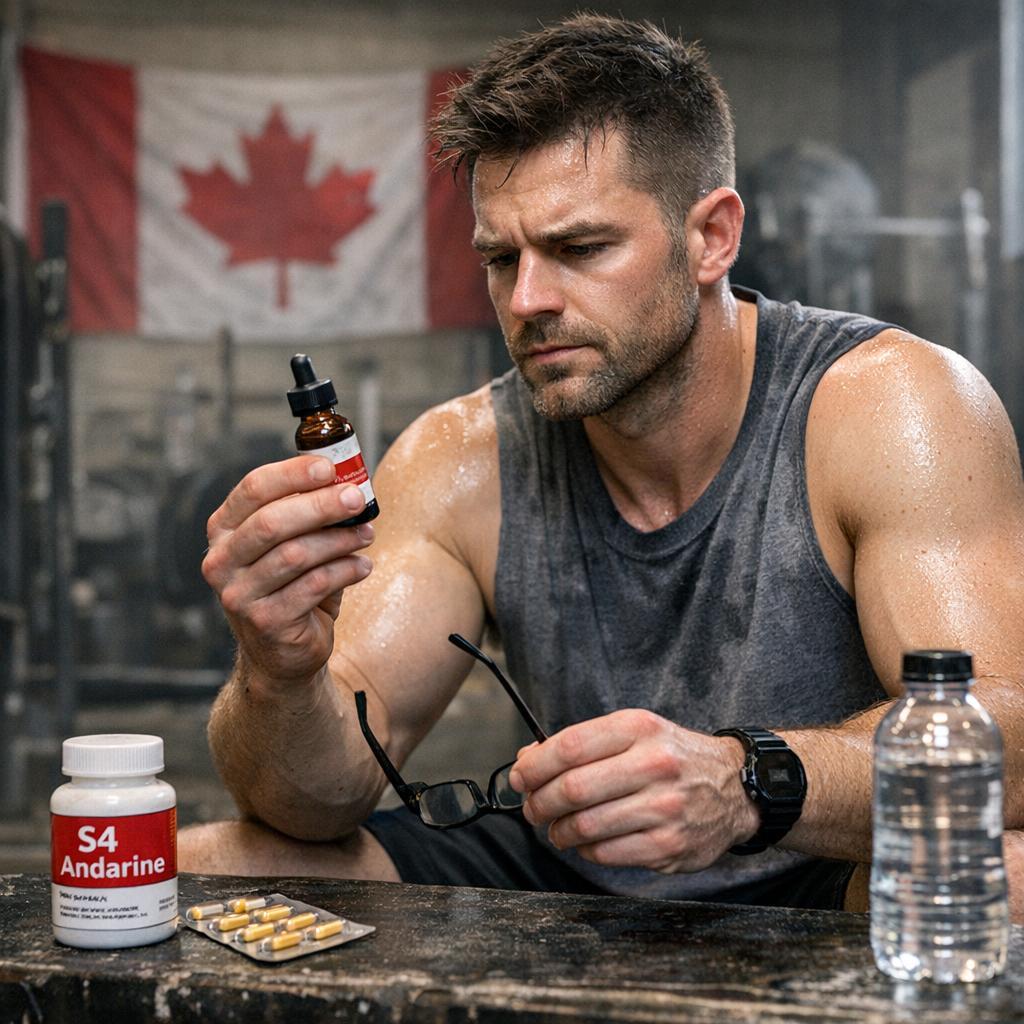
S4 Andarine Basics: Vision Side Effects Canadian Beginners Must understand
S4 Andarine is one of the most talked‑about SARMs in the Canadian fitness community—especially for cutting, hardening, and recomposition phases. But along with the potential physique benefits comes one side effect that stands out above the rest: changes in vision.
If you’re a beginner in Canada researching S4 for the first time, understanding thes vision‑related effects is not optional—it’s essential. This guide will walk you through what S4 is, why vision is such a major talking point, and what canadian users need to consider before going anywhere near it.
The goal here is not to scare you, nor to hype S4 as a shortcut. Rather, you’ll get clear, practical data so you can recognize risks, ask better questions, and make decisions with your eyes wide open—literally.
What This Guide Will Help You Understand
Before you even think about S4, you need a clear picture of how it can affect your vision—short‑term, long‑term, and in everyday Canadian life (driving, working nights, winter conditions, and more).
In This Article, You’ll Learn:
- What S4 Andarine actually is—and why it’s not a supplement or a health product in canada.
- The most commonly reported vision side effects beginners encounter.
- why dose, duration, and timing matter so much for visual changes.
- Practical considerations for Canadians: driving at night, winter darkness, and workplace safety.
- Risk‑awareness steps to take before you even consider a research compound like S4.
Why Vision Effects Are a big Deal for Canadians Specifically
Canadian beginners face a unique mix of factors: long dark winters, icy roads, early sunsets, and jobs that may require driving, operating equipment, or working in low‑light environments. Even “mild” vision changes can become serious when you’re navigating snow, black ice, or dim conditions.
That’s why this article puts vision front and center. You’ll see how reported S4 side effects—like yellow tinting, difficulty adjusting from light to dark, or reduced night vision—could realistically impact your daily life across Canadian provinces and territories.
A Rapid but Crucial Disclaimer
S4 Andarine is not approved as a drug, supplement, or health product in Canada. It is typically sold—where legal—as a research chemical only. nothing here is medical advice or an endorsement of use. The purpose of this guide is education and harm awareness so that Canadians understand the risks tied to vision and overall eye health.
Moving Forward: Learn before You Leap
In the sections that follow,you’ll get a straightforward breakdown of how S4 interacts with vision,what beginners commonly report,and what red‑flag symptoms should never be ignored.By the end, you’ll be far better equipped to evaluate whether the potential physique trade‑offs are worth the visual risks—especially in a Canadian context.

S4 Andarine is popular in Canada for cutting and recomposition,but its impact on night and color vision can catch beginners off guard. This guide walks you through the essential vision side effects,early warning signs and smart precautions so you can make informed choices before starting any research protocol
S4 tends to feel “mild” on paper, especially when Canadians compare it to harsher compounds used for cutting. Yet the most talked‑about trade‑off is what it can do to how you see the world once the lights go down. Instead of assuming these vision changes are just gym folklore, it pays to understand what’s actually happening at the eye level: how some users report a yellow or amber tint, delayed adjustment when walking from radiant snow or streetlights into a dark room, or halo‑like effects around headlights on late‑night drives. Knowing these experiences in advance turns a potential scare into a manageable, trackable side effect that you can actively monitor rather than react to in panic later.
Under the hood, S4 appears to interact with receptors in the retina, which is why its effects tend to show up most clearly in low‑light and color perception rather than in everyday daytime tasks. Many first‑time researchers describe it as though someone slowly applied a yellow Instagram filter to real life, or made dark spaces feel “extra dark” and slow to come into focus. These shifts can be subtle at first, then become more noticeable when you’re driving at dusk, playing late‑night hockey, or walking home on icy Canadian sidewalks where depth and contrast really matter. Instead of guessing, it helps to track what you actually experience, compare it to known patterns, and decide whether the trade‑off fits your comfort zone and lifestyle demands.
- yellow/amber tint: Whites looking cream‑colored, streetlights appearing warmer than usual.
- Night blindness feel: Extra difficulty seeing details in dim gyms, basements, or movie theatres.
- Slower dark adaptation: Eyes taking longer to adjust when stepping out of bright snow or office lighting.
- Halos or glare: Rings or bloom around car headlights and traffic signals, especially in wet conditions.
- Depth and contrast shifts: Shadows appearing “flatter,” making curbs, stairs, or ice patches harder to read.
| Early Signal | What Beginners Often Notice | Smart First Move |
|---|---|---|
| Color shift | Phone screen and snow look slightly yellow | Log it and compare to previous days |
| Dim‑room strain | Eyes feel “tired” sooner in low light | Reduce evening screen glare, add ambient light |
| Driving discomfort | Headlights seem harsher or “fuzzy” | Avoid new night routes; consider pausing protocol |

Foundations First What S4 Andarine Is How It Works And Why Vision Is A Core Concern
Before any Canadian lifter or weekend warrior experiments with S4, it’s crucial to understand that this compound isn’t a vitamin, a pre-workout, or a harmless “boost.” it’s a selective androgen receptor modulator designed to signal your body to build and protect muscle and bone, and it does so in a way that can also interact with vision—especially in low light. Knowing what S4 is, how it behaves in your system, and why your eyes are especially vulnerable puts you in a position of control rather of gambling with your sight for the sake of a leaner look.
S4 (Andarine) is a non‑steroidal compound that binds to androgen receptors in muscle and bone tissue, sending an anabolic “on” signal while aiming to spare othre organs from heavy androgen exposure.Users chase it for harder muscle definition, fat loss support, and strength retention during cuts. Mechanistically, it doesn’t convert to estrogen and doesn’t follow the same pathway as testosterone, which is why it’s frequently enough marketed as a “cleaner” option. But “cleaner” doesn’t mean harmless. S4’s structure and the way it’s metabolized can influence receptors involved in visual processing, especially those that help your eyes adapt when lighting suddenly changes—like stepping from a bright Calgary sidewalk into a dim underground parkade.
The reason vision keeps coming up with S4 is that some of its metabolites are believed to interfere with the retinal pathways that manage contrast and night adaptation. That’s why users often report a yellow or “tinted” filter over their vision or a slow adjustment when going from light to dark—effects that can be alarming if you’re driving at dusk on an icy Ontario highway or working late shifts under fluctuating lighting. Before worrying about macros or cardio protocols,you need to understand how this compound behaves in real life situations that matter to Canadians: snowy nights,early‑morning commutes,and long,dark winters where your eyes work overtime already.
- Primary target: muscle and bone androgen receptors
- Key attraction: Lean look with strength preservation
- Core concern: Night and low‑light vision disturbances
- Risk amplifiers: Higher doses,long cycles,driving at night
| Aspect | what Beginners Should No |
|---|---|
| On‑paper benefit | Helps maintain muscle in a calorie deficit |
| Real‑world trade‑off | Potential issues with night driving and depth perception |
| Non‑negotiable check | Monitor any change in colour,brightness,or dark‑adaptation from day one |
Understanding S4 Related Vision Changes Night Blindness yellow Tint And Light Sensitivity Explained
S4 can subtly reshape how your eyes process the world after dark, and for many Canadian first‑time users this is the side effect that feels the most “real” the fastest.Rather than a dramatic blackout, people usually notice a gradual shift: headlights feel harsher, rooms seem dimmer than they are, and some report a faint golden film over everything. understanding why this happens—and how to monitor it—lets you stay calm, track changes like an athlete, and decide whether the trade‑off is worth it for your specific goals.
S4 interacts with receptors in retinal tissue, which can temporarily change how your eyes adapt to low light and process color. for many users, the first sign is difficulty seeing detail in dim environments—walking from a bright Calgary street into a darker bar, or turning off the bedroom light at night—and a mild yellow or amber tint that makes white walls or snow look slightly warm-toned. Some also feel a spike in light sensitivity, especially with LED headlights, phone screens, or gym lighting. These changes often appear within days to a couple of weeks of starting a cycle and can be more noticeable at higher doses or when dosing later in the day.
- Stepping out of a bright Toronto gym into the evening and feeling like everything is dimmed.
- Needing an extra second to adjust when driving through tunnels or underground parking.
- seeing a subtle yellowish hue on snow, white screens, or gym walls.
- Finding LED headlights,arena lights,or phone screens uncomfortably intense.
| effect | How It Feels | Typical Timing |
|---|---|---|
| Reduced night vision | Dark areas seem “blacker” with less detail | Often within 3–10 days |
| Yellow/amber tint | Whites look warm or slightly golden | Develops gradually during cycle |
| Light sensitivity | Bright lights feel sharp or irritating | Often tied to dose peaks |
Risk Factors Canadian Lifestyle Realities That Can Make Andarine Vision Side Effects More Noticeable
For many canadians, the way we live, work, and commute can quietly turn mild Andarine vision changes into daily frustrations. From long winter nights to screen-heavy office jobs, your environment can shape how intensely you feel side effects like yellow tints or low-light blur. Understanding these everyday triggers doesn’t just protect your eyesight—it helps you design a smarter, safer S4 protocol that fits real Canadian life, not a lab setting.
Across the country, certain habits and conditions can amplify how your eyes react to S4. Long hours on LED-lit screens, extended night driving on dim highways, and brutal Prairie or Northern winters with short daylight windows can all make contrast changes and night-vision issues more obvious. Add in indoor gym lighting,early-morning training in the dark,and bright snow glare reflecting UV in places like Alberta,Manitoba,or Québec,and you have the perfect recipe for noticing every small visual distortion. Even something as simple as moving from a bright outdoor construction site to a shaded lunchroom can magnify the “adjustment lag” that some users report.
Pay special attention if your routine includes any of the following Canadian lifestyle patterns:
- Shift work in healthcare, hospitality, warehouses, or oil & gas with frequent night shifts
- Long winter commutes in low light, on unlit rural roads or icy highways
- Screen-dominated jobs in tech, finance, or remote work with minimal natural daylight
- Outdoor winter sports like skiing, snowmobiling, or ice fishing where snow glare is intense
- High-latitude living (e.g., Northern Ontario, Northern BC, Territories) with very short daylight in winter
| Lifestyle Factor | why It Matters With S4 |
|---|---|
| Night Shifts | Exposes any night-vision reduction immediatly |
| Snow & Ice Glare | Boosts sensitivity to brightness and contrast shifts |
| Heavy Screen Time | Makes yellow tint and eye fatigue much more noticeable |
Practical Dosing Strategies For Beginners How To Minimize Vision Impact While Assessing Your Response
If you’re starting S4 in Canada, the smartest move isn’t chasing maximum strength on day one—it’s protecting your eyesight while you learn how your body reacts. Think of the first 2–3 weeks as a structured experiment: you’re gathering data, not pushing limits. By controlling your dose, timing, and environment, you can frequently enough keep night-vision changes mild and short‑lived while still seeing if Andarine is worth it for your goals.
- Begin with the lowest effective dose—never the “hardcore” protocol you saw online.
- Use consistent dosing times so you can clearly link any visual changes to S4.
- Adjust in small steps only after you’ve logged how your vision responds.
A practical approach for new users is to treat the first week as a “vision calibration phase.” Many beginners in Canada start with 12.5–25 mg per day, split into two doses taken with food, and only consider moving upward if visual effects are mild and manageable. Spreading the total daily amount into an AM/PM split helps avoid sharp peaks that can exaggerate night blindness or yellow tint. keep lighting consistent in the evening when assessing your eyes—check how you see when driving at dusk, walking in dim hallways, or scrolling your phone in the dark. This makes any shift in contrast,brightness,or color much easier to notice early.
| Phase | Daily dose | Goal |
| Days 1–3 | 12.5 mg (PM only) | Check night sensitivity |
| Days 4–7 | 12.5 mg AM + 12.5 mg PM | Assess split dosing impact |
| Week 2+ | Optional 25–37.5 mg split | Titrate only if vision stable |
Safety Protocols For Canadians When To Pause Reduce Or Stop S4 Andarine And When To See an Eye Care Professional
For Canadians, the safest approach is to act quickly and conservatively with any change in sight. Pause your S4 dose immediately and reassess if you notice mild but new symptoms such as slight yellowing, brief difficulty adjusting from light to dark, or subtle halos around lights.During this pause,many users choose to:
- Reduce screen time and bright light exposure to ease eye strain.
- Log symptoms (time of day, severity, triggers) to spot patterns.
- Check driving safety at night in a controlled, low‑risk setting.
- Lower the dose only after symptoms improve, never while they’re getting worse.
- Space doses earlier in the day to reduce nighttime visual stress.
| symptom | Action |
|---|---|
| Sudden major night blindness | Stop S4 and book urgent optometrist visit |
| Persistent yellow / tinted vision | Stop, seek professional eye assessment |
| Flashes, floaters, or dark curtain | Go to ER or emergency eye clinic immediately |
| Eye pain, pressure, or severe headache | Emergency evaluation—rule out acute eye issues |
If your vision changes are intense, sudden, or interfere with daily life—such as struggling to drive at dusk, having trouble navigating dim rooms, or seeing pronounced halos or strong colour shifts—this is your line in the sand: stop S4 fully and contact an eye care professional right away.In Canada, that can be an optometrist (frequently enough fastest access) or an ophthalmologist for more complex issues; In emergency situations, head straight to an ER with ophthalmology coverage. When booking, clearly mention that you are experiencing vision changes perhaps linked to a performance‑enhancing compound; you don’t need to self‑incriminate, but being honest about timing and symptoms helps them protect your eyes.
- Use terms like “night vision changes,” “colour shift,” or “difficulty adapting to light” when describing your concerns.
- Bring a writen list of symptoms, start/stop dates, and doses—this makes your visit more productive.
- Ask specifically for retinal and visual field checks if symptoms feel more than mild.
- Follow all medical advice, even if it means abandoning your planned cycle.
Stay alert to changes in night driving comfort, color perception and glare from screens or snow. Tracking these details in a simple log can help you spot patterns early and adjust your approach before issues escalate
If you’re experimenting with S4 Andarine, your eyes become your most crucial feedback loop. Subtle shifts—headlight halos on a snowy Ontario highway, a weird yellow tint on your phone screen, or extra strain under bright arena lights—can be early signs that your current dose or schedule isn’t working for you. Treat every drive home, late-night gaming session, or winter walk as live “data collection” that helps you stay safe while you chase performance goals.
Instead of relying on memory, build a quick, repeatable routine for logging what you notice.Right after an evening drive or screen-heavy session, jot down a few key points in your phone or training notebook. focus on simple cues like how confident you feel behind the wheel, whether colors look normal under streetlights, and if bright signs or snow reflections feel harsher than usual. Over a Canadian winter,when darkness comes early and snow amplifies glare,these small notes can reveal whether your vision is holding steady or gradually becoming more stressed.
- Night driving: Rate comfort from 1–5 and note if you avoid certain routes.
- Color shifts: Describe any yellow/green tint or “washed out” look to lights.
- Glare sensitivity: Record reactions to snow, LED headlights, phone, TV, or gym lighting.
- Recovery time: Note how long your eyes take to feel normal after exposure.
- Context: Include dose, time of last capsule, weather, and screen time.
| Log Moment | What To Note |
|---|---|
| After commute | Headlight halos, lane visibility |
| Late-night screens | Color clarity, squinting, eye fatigue |
| Snowy days | Glare off snow, need for sunglasses |
💡 Pro Tip: Before any S4 Andarine research, book a baseline eye exam and ask for documented visual acuity and contrast sensitivity. This gives you a professional reference point if you notice changes later
Before you even think about pushing your vision with experimental compounds, lock in a rock-solid starting point. A quick, well-documented eye exam turns vague “my sight feels off” worries into clear, trackable data you can actually act on.In Canada, most optometrists are familiar with performance-conscious clients—if you tell them you’re tracking changes for research, they’ll usually take the extra time to document the details that matter. That simple appointment gives you leverage: if something shifts, you’re not guessing, you’re comparing.
When you book your appointment, be specific about what you want tested and recorded. Don’t settle for “eyes look fine” in your chart—ask for exact numbers and printed or digital results you can store. Key metrics to request include:
- Distance and near visual acuity (e.g., 20/20, 20/25 in each eye)
- Contrast sensitivity (how well you see in low light or against low contrast)
- Colour perception basics if available
- Notes on night vision or glare sensitivity, if you mention concerns
| Test | Why It Matters |
| Visual Acuity | Catches sharpness changes you might ignore. |
| Contrast Sensitivity | Flags early issues with dim rooms and night driving. |
| Glare / Night Notes | Creates a written baseline for low-light comfort. |
Put Your Vision First Review these S4 Andarine basics save the key warning signs and plan your next steps with safety and confidence
Before any capsule, dropper, or research vial touches your hand, decide that your eyesight is non‑negotiable. With this compound, “mild” vision changes can arrive quietly and then dominate your daily life if you’re not paying attention. Treat your eyes like you would treat a heavy barbell over your chest: you need a game plan, a spotter, and an exit strategy if things go wrong. By locking in a clear system to track symptoms and respond early, you remove the panic factor and replace it with calm, informed control.
Your strategy should be practical enough to use in real life—on dark Canadian winter mornings, late‑night drives, and long hours in front of a screen. Build routines that make it easy to notice when something shifts: how you see at dusk, how bright your phone feels, how quickly your eyes adapt when you walk from snow glare into a dim gym. When you combine structured monitoring with clear decision rules,you stop gambling with your sight and start managing risk like an athlete who intends to keep winning for decades.
Anchor your plan around a few non‑negotiable checkpoints. Before you even consider starting, define your personal “red lines” and write them down. These might include:
- Persistent yellow or dark tint that makes whites or snow look off‑colour
- Trouble seeing in low light — parking lots, basements, night streets
- Delayed adjustment when moving from bright to dark or vice versa
- Sudden halos, flashes, or blurred edges around objects or lights
- Headaches or eye strain that feel new or more intense
If any of these show up or worsen, your next step should be automatic: pause use, document what you’re experiencing, and be ready to get a professional eye exam. Treat these signs as data, not drama. They are your early‑warning radar,telling you exactly when your protocol needs to change.
| Vision Check | How to Use It | Action Trigger |
|---|---|---|
| Night‑time walk test | Walk the same route at dusk 2–3x/week | Streetlights feel harsher or details fade |
| Screen brightness check | Note your usual phone brightness setting | Needing much lower brightness to feel okay |
| Snow & sunlight check | Compare how snow and sky look on clear days | Yellow tint, glare, or “washed out” contrast |
What Canadian Lifters Should Know
Before You Touch S4: Your Vision Is Non‑Negotiable
As a Canadian beginner exploring S4 Andarine,understanding its vision side effects is not optional—it’s your first line of defence. The choices you make before you ever run a cycle will determine whether S4 is just another experiment… or a decision you deeply regret.
You now have the foundational knowledge: what can happen to your sight, how to watch for warning signs, and which safeguards responsible users refuse to skip. The next step is deciding how seriously you’ll treat that information.
Bringing It All Together: S4,Vision & Your Long‑Term Health
S4 Andarine has a reputation for “dry gains” and aggressive recomposition,but it is equally known for its impact on vision—especially night vision,color perception,and light sensitivity. For Canadians just starting out, that trade‑off needs to be approached with cold, clinical honesty.
Key Takeaways You Should Not Ignore
- S4 is not a beginner “shortcut.” It carries real, documented risks to visual function.
- vision changes are a red flag, not a “badge of honor.” Night blindness,yellow tinting,or halo effects are signals,not side notes.
- Dose, duration, and individual sensitivity matter. Canadian users report very different thresholds for when vision sides appear.
- Driving and night activities can become unsafe. This has legal and practical implications in every province.
- Medical supervision is non‑negotiable. Optometrist check‑ups and honest disclosure to a healthcare professional are crucial.
Building a Safer Strategy as a Canadian Beginner
You don’t have to rely on hearsay,gym rumors,or anonymous forum posts. You can approach S4—and its vision side effects—with a structured, evidence‑minded strategy:
- Clarify your goal first. If your objective can be achieved with training, nutrition, and legal supplementation, S4 might not be worth the risk.
- Understand the legal and access landscape in canada. “Research chemical” labels do not remove personal duty.
- Use a pre‑planned risk protocol. Set hard rules for maximum dose, maximum duration, and non‑negotiable stop conditions.
- Schedule baseline and follow‑up eye exams. This turns vague “I feel different” into measurable changes a professional can track.
- Keep a symptoms log. Note any changes in night vision, color perception, or light sensitivity daily during and after a cycle.
Responsible Mindset Moving Forward
The most experienced Canadian users treating S4 with respect don’t just ask, “What can I gain?” They ask, “What am I prepared to risk—and how will I limit that risk as much as possible?”
By thinking this way, you separate yourself from impulsive experimenters and move into the mindset of a long‑term athlete: someone who protects health, performance, and vision for decades, not just for a single cutting phase.
Your Next Step: Turn Knowledge Into Protection
You now understand the basics of S4 Andarine and the vision side effects Canadian beginners must take seriously. the real value of this knowledge comes from what you do with it:
- Re‑evaluate whether S4 aligns with your goals and risk tolerance.
- Commit to never ignoring visual side effects—no matter how mild they seem.
- prepare a written plan (and exit strategy) before any experimental use.
- stay updated with emerging research, Canadian guidance, and medical insights.
You are not powerless or uninformed anymore. you have the tools to make a measured, informed, and self‑protective decision about S4 Andarine—and your eyesight.
Ready to protect your vision first? Save this guide, share it with other Canadian beginners, and speak with a qualified healthcare professional before you go anywhere near S4 Andarine.
🔗 Related on Steroids Canada


About author

Related posts





Comments are closed