
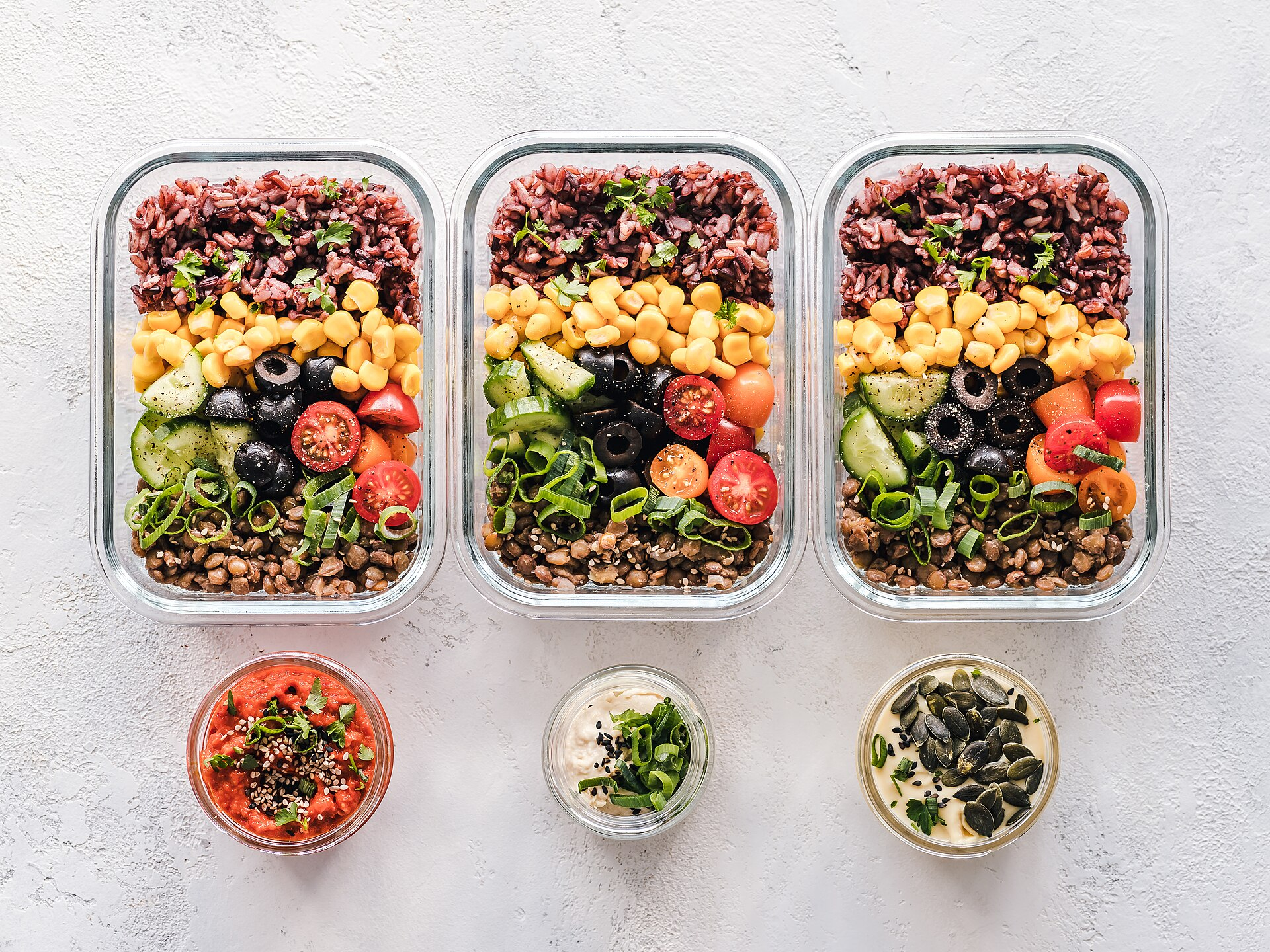
A good muscle-building meal plan starts with a small calorie surplus and enough protein, then fills the rest with carbohydrates for training and fats for health. Meal timing matters less than total intake, but spreading protein across three to five meals helps.
- Protein: about 1.6–2.2 g per kilogram of body weight a day.
- A surplus of roughly 250–500 calories a day limits fat gain.
- Simple, repeatable meals beat complicated plans you cannot stick to.
Training builds the signal for muscle growth; food supplies the material. This guide sets out the numbers, explains how to turn them into meals, and gives a sample day using foods easy to find in any Canadian grocery store.
Step 1: Set your calories
Start by estimating maintenance calories, the amount that keeps your weight stable. A rough guide for active adults is 30–35 calories per kilogram of body weight, but the most reliable method is to track what you eat for two weeks while your weight holds steady. Then add a surplus:
| Training experience | Daily surplus | Target weekly gain |
|---|---|---|
| Beginner | 300–500 calories | About 0.5% of body weight |
| Intermediate | 250–350 calories | About 0.25–0.5% |
| Advanced | 150–250 calories | About 0.25% |
Weigh yourself several mornings a week and adjust every two to three weeks based on the average.
Step 2: Set your macros
- Protein: 1.6–2.2 g per kilogram of body weight. A 2018 meta-analysis in the British Journal of Sports Medicine found benefits for muscle growth plateaued around 1.6 g/kg on average, with the upper range covering individual variation.
- Fat: about 20–35% of calories, including sources of omega-3s.
- Carbohydrates: the remaining calories, often 3–6 g per kilogram for people lifting regularly.
Step 3: Build meals
Divide protein across three to five meals of about 0.4 g per kilogram each, roughly 30–45 g for most people. Research suggests this spreads muscle protein synthesis across the day better than one or two large protein meals.
- Protein base: chicken, turkey, lean beef, fish, eggs, Greek yogurt, cottage cheese, tofu, tempeh, lentils.
- Carbohydrate: rice, oats, potatoes, pasta, bread, fruit, beans.
- Vegetables: fresh or frozen; frozen is cheaper in Canadian winters and just as nutritious.
- Fat: olive or canola oil, nuts, nut butter, avocado, cheese.
Sample day (about 3,100 calories, 165 g protein)
| Meal | Foods |
|---|---|
| Breakfast | Oats cooked in milk with a banana and peanut butter, plus 3 eggs |
| Lunch | Chicken breast, rice, mixed vegetables, olive oil |
| Pre-workout snack | Greek yogurt with berries and granola |
| Post-workout | Whey shake and a bagel with jam |
| Dinner | Salmon or lean beef, potatoes, salad with canola oil dressing |
| Evening | Cottage cheese with almonds |
Timing around training
Eating a meal with protein and carbohydrates within a few hours before and after training is sensible, but the “anabolic window” is much wider than once thought. Total daily protein and calories matter far more than exact timing. A protein-rich snack before bed, such as Greek yogurt or cottage cheese, can support overnight muscle protein synthesis. See pre- and post-workout nutrition.
Eating well on a Canadian budget
- Buy rice, oats and lentils in bulk.
- Use frozen vegetables and fruit.
- Cook whole chickens or family packs of thighs, which cost less than breasts.
- Canned tuna, salmon and beans are cheap, high-protein staples.
- Eggs and milk remain among the cheapest protein sources per gram.
- Check flyers and apps such as Flipp for weekly deals.
Supplements worth considering
- Whey or plant protein for convenience
- Creatine monohydrate, 3–5 g a day, the best-supported muscle supplement
- Vitamin D in winter
BCAAs add little if protein is adequate; see do you need BCAAs.
If you use anabolic steroids
Anabolic steroids raise protein synthesis, so protein needs sit at the upper end of the range. They also worsen cholesterol and blood pressure, which makes the quality of the diet more important: more fish, oats, legumes, vegetables and olive oil, and less salt, processed meat and alcohol. See steroids and cholesterol.
Common mistakes
- Eating “clean” but not enough, so weight never moves
- Eating far too much and gaining mostly fat
- Low protein at breakfast and lunch, with most at dinner
- Neglecting fruit, vegetables and fibre
- Changing the plan every week instead of adjusting from data
See winter bulking and counting macros.
Frequently asked questions
How much protein do I need to build muscle?
About 1.6–2.2 g per kilogram of body weight a day, spread across three to five meals.
How many calories should I eat to bulk?
About 250–500 calories above maintenance, aiming to gain roughly 0.25–0.5% of body weight a week.
Does meal timing matter for muscle growth?
Less than total intake. Spreading protein across the day and eating around training helps, but daily totals matter most.
Photo: Ella Olsson from Stockholm, Sweden, Wikimedia Commons (CC BY 2.0).
General information, not medical advice. A registered dietitian can build a plan around your health needs.
Related on Steroids Canada