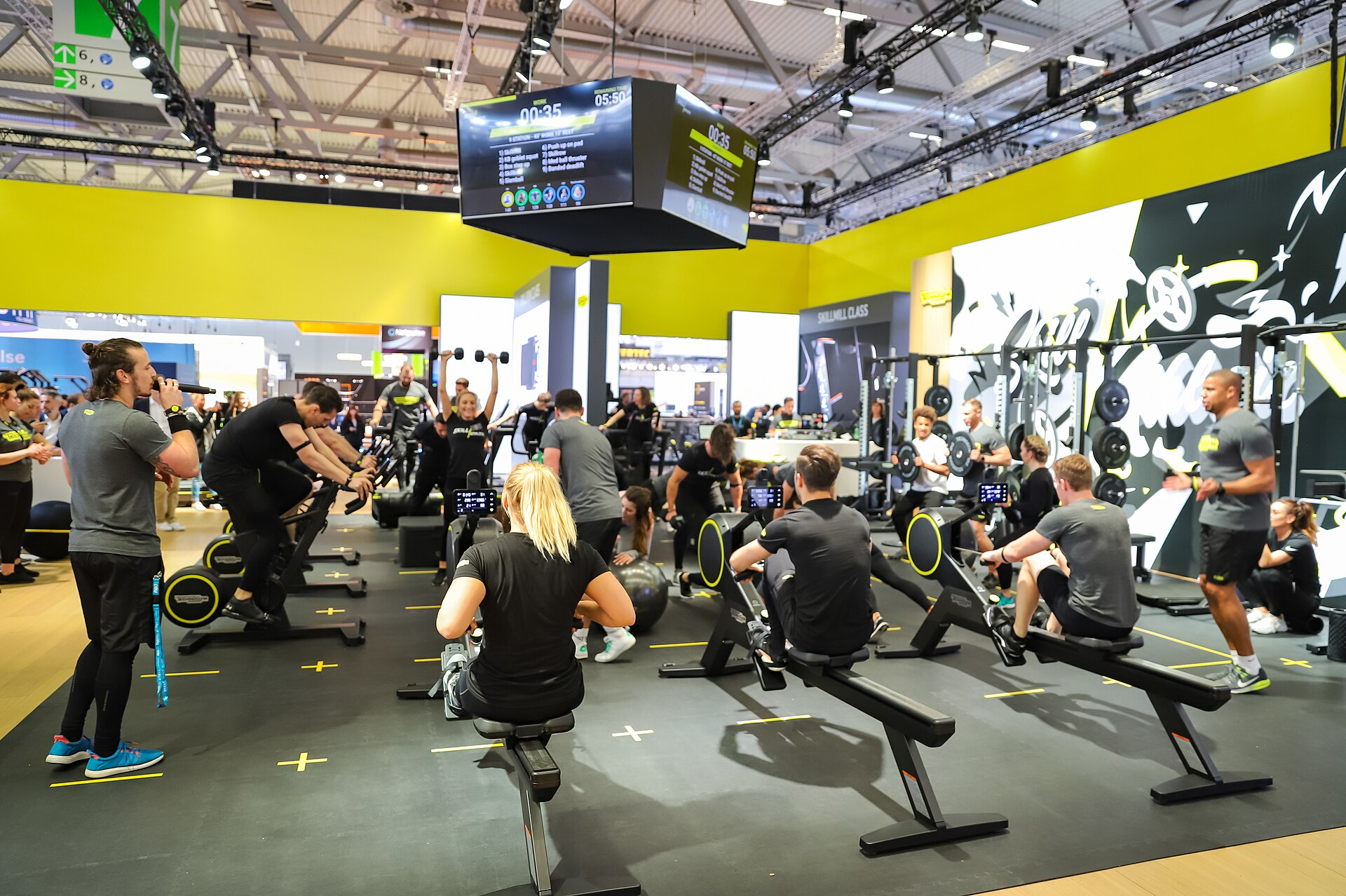
Rowing machines give a low-impact, full-body workout that uses the legs, back, arms and core. They suit steady cardio and intervals alike. Good technique matters: the power comes mostly from the legs, not the arms.
- Sequence: legs, then body, then arms on the drive; reverse on the recovery.
- Damper setting around 3–5 suits most people.
- A 30-minute moderate row burns roughly 250–350 calories for many adults.
The rowing machine (or “erg”) is underused in many Canadian gyms, partly because people are unsure how to use it. With a few minutes of technique practice, it becomes one of the most effective cardio tools available.
Why row?
- Full body: about 60% legs, 20% core and back, 20% arms.
- Low impact: no pounding on knees and ankles.
- Measurable: monitors show pace per 500 m, watts and distance.
- Versatile: steady sessions, intervals or short sprints.
Technique
- The catch: shins near vertical, arms straight, leaning slightly forward from the hips.
- The drive: push hard with the legs first, then swing the body back slightly, then pull the handle to the lower ribs.
- The finish: legs straight, leaning back slightly, elbows past the body.
- The recovery: arms forward, then body forward, then bend the knees and slide back.
Common mistakes include pulling with the arms first, bending the knees before the arms are extended on the recovery, hunching the back and rushing the slide. A useful rhythm is one count on the drive and two counts on the recovery.
Damper setting
The damper controls how much air enters the flywheel, changing the feel. A higher setting feels heavier, like a slower boat, but does not automatically mean a better workout and can tire the back. Most people do best around 3–5. Resistance actually comes from how hard you push.
Workouts
| Level | Workout |
|---|---|
| Beginner | 10 × (1 min moderate, 1 min easy) |
| Beginner | 15–20 minutes steady at a conversational pace |
| Intermediate | 5 × 500 m hard, 2 min easy between |
| Intermediate | 30 minutes steady, stroke rate 20–24 |
| Advanced | 8 × 250 m sprint, 1 min rest |
| Advanced | 2,000 m test for time |
The 2,000 m row is the standard benchmark in rowing; recording it every few months tracks fitness gains.
Calories and fat loss
A 75 kg adult burns roughly 250–350 calories in 30 minutes of moderate rowing, more with intervals. Rowing improves fitness and supports a calorie deficit, but, as with all exercise, diet does most of the work for fat loss. See HIIT workouts.
Rowing and strength training
Because rowing uses the legs and back, schedule hard rowing sessions away from heavy deadlift or squat days, or do easy rowing as a warm-up. Rowing will not build maximal strength, so pair it with two to four strength sessions a week.
Reading the monitor
The key number is the split: your pace per 500 m. Lower is faster. A beginner might row at 2:30–2:50 per 500 m at a steady effort; fitter rowers hold under 2:00. Stroke rate, shown as strokes per minute, should usually be 18–24 for steady work and 26–32 for sprints. Rowing faster by moving the slide quickly with weak pushes wastes energy; a strong drive at a moderate stroke rate is more effective. Watts show the power you produce and are useful for comparing efforts across sessions.
Tracking the same workout over weeks, such as a 20-minute steady row or a 2,000 m test, shows clear improvement and keeps sessions purposeful.
Back safety
Poor technique, especially rounding the lower back at the catch or pulling with the back first, can strain the lower back. Keep the core braced, hinge from the hips, and keep the damper moderate. People with existing back pain may start with short, easy sessions.
Rowing at home
Rowers are compact compared with treadmills and many fold or stand upright for storage, making them a popular home option for Canadian winters. A quality air or magnetic rower lasts many years. Short daily sessions of 15–20 minutes at home can add up to more weekly training than occasional long gym visits.
Rowing in Canada
Many Canadian gyms and community centres have Concept2 rowers, the most common model. Canada has a strong rowing tradition, with clubs in most major cities that offer learn-to-row programmes in summer and indoor training in winter.
Frequently asked questions
Is a rowing machine good for losing weight?
Yes. It burns a meaningful number of calories, works the whole body and is low impact. Combine it with a calorie deficit.
What damper setting should I use?
Around 3–5 for most people. Higher settings feel heavier but do not automatically give a better workout.
Does rowing work the arms or legs?
Mostly the legs, about 60% of the effort, with the back, core and arms contributing the rest.
Photo: dronepicr, Wikimedia Commons (CC BY 2.0).
General information, not medical advice.
Related on Steroids Canada