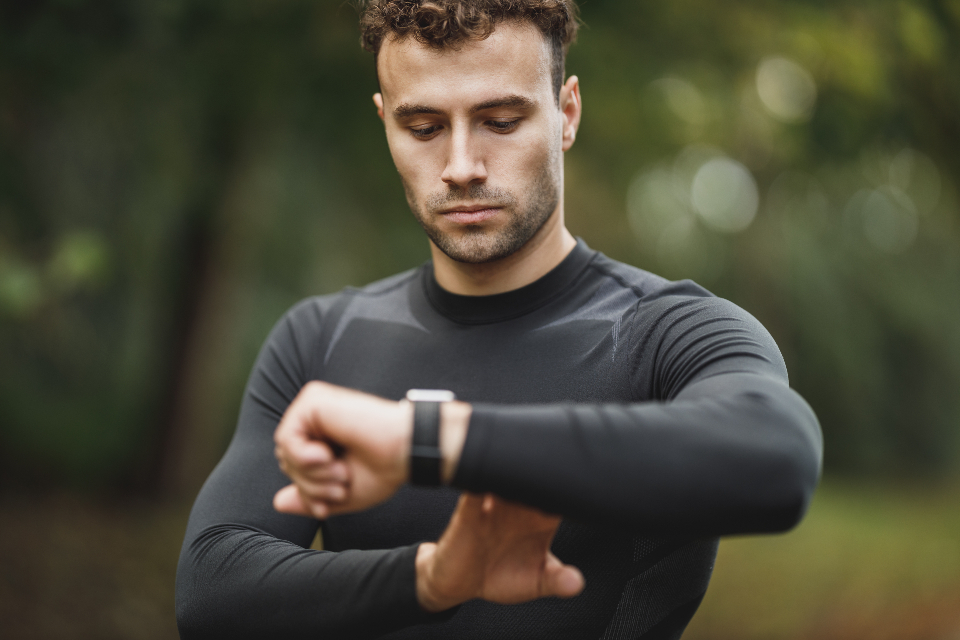
Fitness wearables are good at counting steps and measuring heart rate at rest, reasonable for sleep duration, and poor at estimating calories burned. Used for trends rather than exact numbers, they help track activity, recovery and progress.
- Calorie estimates can be off by 20–50% or more.
- Resting heart rate and heart rate variability (HRV) trends can flag poor recovery.
- Do not “eat back” tracker calories during a diet.
Smartwatches and fitness bands are everywhere, promising to track every step, heartbeat and calorie. They can be valuable tools, as long as you know what they measure well and what they guess. Here is a practical guide.
How accurate are wearables?
| Measure | Accuracy | Best use |
|---|---|---|
| Steps | Good (within about 5–10% for walking) | Tracking daily movement |
| Resting heart rate | Good | Recovery and fitness trends |
| Heart rate during exercise | Good for steady activity; weaker for intervals and lifting | Chest straps are more accurate |
| Sleep duration | Moderate | Trends in total sleep |
| Sleep stages | Limited | Rough guide only |
| Calories burned | Poor; errors of 20–50% or more | Comparing days, not exact intake planning |
| HRV | Reasonable as a personal trend | Recovery and stress |
A 2017 Stanford study tested seven popular devices and found heart rate was generally accurate, but no device measured energy expenditure well; the most accurate was off by about 27% on average, and the worst by over 90%.
Using wearables for fat loss
- Step counts are the most useful metric. Track your weekly average and keep it steady or rising during a diet. See NEAT and daily movement.
- Do not eat back exercise calories shown by your device; they are usually overestimated.
- Use trends: compare this week with last week rather than trusting single numbers.
- Pair with a food log and scale for a complete picture. See progress tracking apps.
Tracking recovery
Two measures help judge recovery:
- Resting heart rate: a morning reading several beats above your normal for a few days can signal fatigue, illness, dehydration, poor sleep or alcohol.
- Heart rate variability (HRV): the variation between heartbeats. Higher HRV relative to your own baseline generally indicates better recovery; a sustained drop suggests stress or fatigue.
Some studies show HRV-guided training, adjusting intensity based on daily HRV, can produce similar or better fitness gains than fixed plans. Compare only to your own baseline; HRV varies widely between people and devices.
Wearables and performance drugs
Anabolic steroids, stimulants, clenbuterol and thyroid hormone can raise resting heart rate and blood pressure and disrupt sleep. A wearable can help spot these changes: a resting heart rate that climbs and stays high is a signal to reassess and see a doctor. Wearables do not replace blood pressure checks or bloodwork, though. See bloodwork guide and heart health on steroids.
Sleep tracking
Wearables estimate sleep from movement and heart rate. They are fairly good for total sleep time but less reliable for stages such as deep and REM sleep. Use them to notice patterns, such as shorter sleep on certain days, and focus on habits rather than chasing perfect scores. See sleep and recovery.
Heart rhythm features
Some smartwatches can detect possible atrial fibrillation (AFib) and record single-lead ECGs. These features can prompt people to seek care, but they can also produce false alarms. Any alert should be followed up with a doctor.
Choosing a device
For most people, a basic tracker or smartwatch that counts steps and measures resting heart rate is enough. Runners and cyclists may want GPS and a chest-strap heart rate monitor for accurate training data. Lifters gain less from wrist-based heart rate during sets but can use devices for daily activity and recovery trends. Battery life, comfort for sleeping, and app quality matter more than advanced features you will not use.
Using recovery data sensibly
If your resting heart rate is up and HRV is down for several days, consider an easier training day, more sleep and checking for illness. If they return to normal after a rest day, you can resume hard training. Use these signals alongside how you feel; if you feel great and lift well, a single low HRV reading is not a reason to skip training.
Avoiding obsession
For some people, constant tracking increases anxiety or leads to rigid behaviour. If sleep scores make you anxious or step targets feel stressful, take a break from the data or turn off certain notifications. The goal is to support healthy habits, not to be controlled by a device.
Frequently asked questions
Are fitness trackers accurate for calories?
No. Studies show calorie estimates can be off by 20–50% or more. Steps and resting heart rate are much more reliable.
What is HRV and why does it matter?
Heart rate variability is the variation between heartbeats. Compared with your own baseline, it can indicate recovery and stress.
Should I eat back calories from my fitness watch?
Generally no, because exercise calories are usually overestimated.
Photo: Direct Media, StockSnap (public domain).
General information, not medical advice.
Related on Steroids Canada