
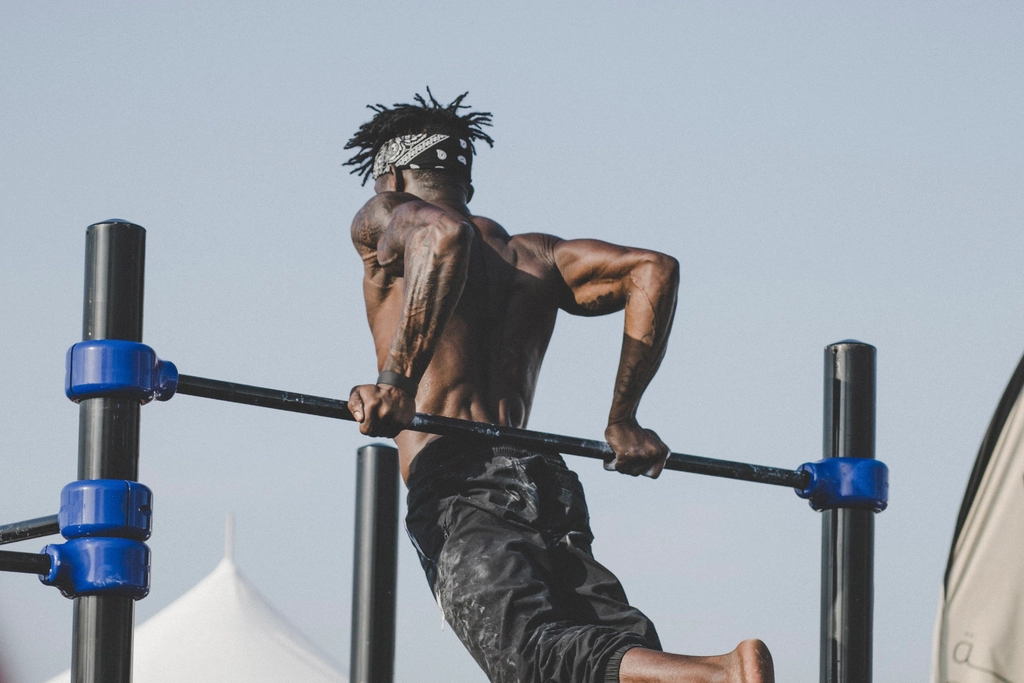
A big back comes from two kinds of work: vertical pulls (pull-ups, pulldowns) that build width through the lats, and horizontal rows that build thickness through the mid-back. Train both, add load or reps over time, and give your back roughly 10 to 20 hard sets a week.
- Width is mostly lats and teres major; thickness is traps, rhomboids, rear delts and spinal erectors.
- Grip changes the feel more than the result. Range of motion and effort matter more.
- Pull with your elbows, control the lowering phase and stop chasing weight with momentum.
Few things change how a physique looks from every angle the way a developed back does. A wide upper back makes the waist look smaller, thick mid-back muscle gives you presence in a T-shirt, and strong spinal erectors carry over to every squat and deadlift you do. The good news is that the back responds very well to straightforward training. The bad news is that it is also the muscle group people train worst, because they cannot see it while they work.
The muscles that make a back look big
“Back” covers several muscles that do different jobs. Knowing which is which makes exercise choice simple.
| Muscle | What it does | What it adds visually |
|---|---|---|
| Latissimus dorsi (lats) | Pulls the upper arm down and back | Width, the V-taper |
| Teres major | Helps the lats, sits near the armpit | Width high on the back |
| Trapezius (mid and lower) | Pulls the shoulder blades together and down | Thickness between the shoulder blades |
| Rhomboids | Retract the shoulder blades | Mid-back density |
| Rear deltoids | Pull the arm back at shoulder height | Fullness where back meets shoulder |
| Spinal erectors | Keep the spine extended | The “Christmas tree” in the low back |
Width: vertical pulling
The lats are worked hardest when you pull your arm down from overhead toward your hip. That is why pull-ups, chin-ups and lat pulldowns are the backbone of width training.
- Pull-ups and chin-ups. The best bodyweight back builders. If you cannot do 6 or more, use an assisted machine or a band, or do slow negatives.
- Lat pulldowns. Easy to load in small steps, which makes them ideal for progressive overload. A neutral or medium overhand grip works well for most people.
- Single-arm cable pulldowns. Let you pull the elbow further toward the hip, which many lifters feel more in the lats.
- Straight-arm pulldowns. Isolate the lats without biceps help. Good as a finisher.

Thickness: rows and hinges
Rows pull the arm back toward the torso, which loads the mid-traps, rhomboids and rear delts along with the lats. Hinges such as the deadlift and Romanian deadlift build the erectors that hold the whole structure together.
Free-weight rows
- Barbell row and dumbbell row
- Heavier loading, more total-body effort
- Lower back works hard to hold position
Supported rows
- Chest-supported row, seated cable row, T-bar with pad
- Easy on the lower back
- Easier to push close to failure safely
Most people do best with one of each: a heavier free-weight row for strength and a supported row they can take close to failure for size. If your lower back is already tired from squats and deadlifts, lean on supported rows.
How much back work per week
Research on training volume, including a 2017 meta-analysis by Schoenfeld and colleagues, found that more weekly sets produced more growth up to a point, with 10 or more sets per muscle outperforming fewer. Split those sets across two sessions. For the back, a simple approach is two vertical pulls and two rows across the week, three to four sets each.
Technique fixes that add size
- Think elbows, not hands. Imagine your hands are hooks. Drive the elbows down on pulldowns and back on rows. This keeps the biceps from taking over.
- Control the negative. Lower the weight over two to three seconds. The stretched position under load is a strong signal for growth.
- Get a full stretch. Let the shoulder blades move forward at the bottom of a row and up at the top of a pulldown before you pull again.
- Use straps on heavy sets. Grip often fails before the back does. Straps let you finish the set for the target muscle.
- Stop swinging. Some body English on the last rep is fine. If every rep needs a heave, the weight is too heavy.
If you cannot pause the weight for a second at the top of a row, you are lifting it with momentum, not your back.
A sample back day
| Exercise | Sets x reps | Notes |
|---|---|---|
| Pull-up or lat pulldown | 3 x 6-10 | Full hang at the bottom |
| Barbell or dumbbell row | 3 x 8-10 | Flat back, pull to the lower ribs |
| Chest-supported row | 3 x 10-12 | Squeeze for one second |
| Single-arm cable pulldown | 2 x 12-15 | Elbow to hip |
| Rear-delt fly | 2 x 15-20 | Light, strict |
Add a rep or a small amount of weight when you hit the top of the rep range on every set. Pair this with a second back session later in the week, or blend back work into an upper/lower or push pull legs split. Recovery matters as much as the workout: sleep, protein and enough total calories decide how much of this work turns into muscle. Our bodybuilding meal plan guide covers the eating side, and the high-protein recipe kitchen has hundreds of meals with full macros.
- Train both directions: vertical pulls for width, rows for thickness.
- Aim for 10 to 20 hard sets a week, split over two sessions.
- Lead with the elbows and control every lowering phase.
- Progress slowly and consistently. One more rep each week adds up.
Frequently asked questions
Are deadlifts necessary for a big back?
No. Deadlifts build the erectors and grip very well, but you can build a full back with rows, pulldowns and Romanian deadlifts. Keep them if you enjoy them and recover well.
Why do I feel rows in my biceps instead of my back?
Usually the weight is too heavy or you are pulling with your hands. Lighten the load, use straps, and focus on driving the elbows back while keeping your wrists relaxed.
How long does it take to see a wider back?
Most beginners notice visible change in 8 to 12 weeks of consistent training and eating enough protein. Progress slows with experience, so measure with photos taken in the same light every month.
Top photo: rawpixel (public domain).
This article is general fitness information. If you have a back or shoulder injury, get it assessed by a physiotherapist or doctor before starting a new program.
Related on Steroids Canada