
Most pre-workout products are built around a handful of ingredients with real evidence, mixed with many that have little. Caffeine is the most reliable performance aid. Beta-alanine, citrulline, creatine and dietary nitrate have support for specific goals. Proprietary blends that hide amounts make it impossible to know what you are getting.
- Caffeine: about 3 to 6 mg per kg of body weight improves strength and endurance in many people.
- Health Canada advises adults to keep total caffeine to 400 mg a day.
- Look for a Natural Product Number (NPN) on the label.
Walk into any supplement store in Canada and you will find a wall of tubs promising explosive energy, insane pumps and laser focus. Behind the marketing, most products rely on the same few ingredients. Knowing which ones work, and in what amounts, will save you money and help you avoid jittery, sleepless nights.
The ingredients with real evidence
| Ingredient | Effective amount in studies | What it helps |
|---|---|---|
| Caffeine | 3 to 6 mg/kg, 30 to 60 min before | Strength, power, endurance, focus |
| Beta-alanine | 3.2 to 6.4 g per day, taken daily | Efforts lasting about 1 to 4 minutes |
| Citrulline (or citrulline malate) | About 6 to 8 g citrulline malate | Possibly more reps; evidence is mixed |
| Dietary nitrate (beetroot) | About 6 to 8 mmol nitrate | Endurance and high-intensity efforts |
| Creatine monohydrate | 3 to 5 g per day, any time | Strength and muscle over weeks |
Caffeine: the main event
The International Society of Sports Nutrition’s position stand concludes that caffeine reliably improves many types of exercise performance at about 3 to 6 mg per kilogram of body weight. For an 80 kg lifter, that is roughly 240 to 480 mg, although many people get most of the benefit at the lower end.
Tolerance builds with daily use. Some people cycle caffeine to keep it effective, which our article on caffeine cycling explores.

Beta-alanine, citrulline, nitrates and creatine
Beta-alanine raises carnosine levels in muscle, which buffers acid during hard efforts. It works by loading over weeks, so taking it only before training is not required. The harmless tingling (paresthesia) many people feel comes from larger single doses; splitting the daily amount reduces it.
Citrulline is converted to arginine and helps produce nitric oxide, which is why it is linked to “pumps.” Some studies show more reps to failure and less soreness, others show no difference. It is low risk but not a guaranteed effect.
Dietary nitrate from beetroot juice improves efficiency in endurance work and some high-intensity efforts. Many pre-workouts include beet powder at amounts too small to matter.
Creatine is the best-supported muscle-building supplement, but it works by saturating muscle over time, not as a pre-workout stimulant. Taking it daily is what counts.
Ingredients with weak support
Often oversold
- Arginine (poorly absorbed compared with citrulline)
- BCAAs before training
- Tyrosine for focus
- “Testosterone boosting” herbs
Avoid
- DMAA and similar stimulants, which Health Canada has warned against
- Products with undeclared stimulants
- Huge caffeine doses in one scoop
- Anything without an NPN
Our article on whether you need BCAAs covers why they add little if you eat enough protein.
Be especially careful with “fat burner” pre-workouts. They often stack high caffeine with yohimbine, synephrine or other stimulants, which can push heart rate and blood pressure up sharply during heavy lifting. If you use anabolic steroids, which can already raise blood pressure, the combination deserves extra caution. Start with half a scoop to judge your response, never take two products with stimulants on the same day, and stop if you notice chest pain, palpitations, dizziness or a pounding headache.
How to read a Canadian label
- Find the NPN. Health Canada authorizes natural health products with an eight-digit Natural Product Number. No NPN means it has not been reviewed for sale in Canada.
- Check amounts. Each ingredient should be listed with its dose. A “proprietary blend” hides how much of each is inside.
- Add up caffeine. Look for caffeine from all sources, including green tea or guarana extracts.
- Look for third-party testing if you compete in tested sport, since contaminated supplements have caused positive tests.
If a label hides the doses, assume the useful ingredients are underdosed.
A simple do-it-yourself pre-workout
You can cover the proven basics without an expensive tub: a coffee or a caffeine tablet at a dose that suits you, creatine monohydrate daily, and beta-alanine daily if you do lots of high-rep or interval work. Add a carbohydrate snack such as a banana or toast an hour before training if you train hard or long. That covers most of what the research supports for a fraction of the price.
A good pre-workout cannot replace a solid program and diet. For the food side, our guide to pre- and post-workout nutrition is a good next read.
- Caffeine is the proven core; keep total intake under 400 mg a day.
- Beta-alanine and creatine work through daily use, not timing.
- Citrulline and nitrates help some people, some of the time.
- Buy products with an NPN and fully listed doses.
Frequently asked questions
How much caffeine is safe before a workout?
Studies use about 3 to 6 mg per kg of body weight. Health Canada advises healthy adults to keep total daily caffeine to 400 mg, counting all sources.
Why does pre-workout make my skin tingle?
That is beta-alanine. The tingling is harmless and usually fades within an hour. Smaller, split doses reduce it.
Do I need pre-workout to build muscle?
No. Training, protein, total calories and sleep build muscle. Pre-workout can help you train harder on a given day, but it is optional.
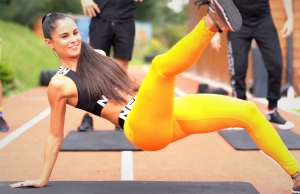
Top photo: phatonlaphat thongsriphong, StockSnap (public domain).
This article is general information, not medical advice. Caffeine and stimulants can be unsafe with heart conditions, high blood pressure, pregnancy or some medications. Check with a pharmacist or doctor first.
Related on Steroids Canada