CJC-1295 is a lab-made version of growth hormone-releasing hormone (GHRH). Ipamorelin mimics ghrelin. Combined, they trigger a larger growth hormone pulse than either one alone, which is why the pair is the most common peptide combination in Canada.
- CJC-1295 “with DAC” lasts about a week; “no DAC” (mod GRF 1-29) lasts minutes.
- Both raise IGF-1, so bloodwork shows whether they are working.
- Neither is approved for human use in Canada.
Most people who start peptides for recovery or body composition end up looking at this pairing. The reasoning behind it is sound physiology, and one of the two parts has real human data behind it. But the details, especially the difference between the two versions of CJC-1295, are often confused. Here is a clear explanation.
How the two signals work together
Your pituitary releases growth hormone (GH) in pulses, controlled by two hypothalamic signals: GHRH, which says “release”, and somatostatin, which says “stop”. Ghrelin, a hormone from the stomach, adds a third input that amplifies release.
- CJC-1295 acts on the GHRH receptor. It increases the amount of GH the pituitary releases.
- Ipamorelin acts on the ghrelin (GHS) receptor. It boosts the pulse and partly overrides somatostatin.
Because they act on different receptors, the effect of combining them is greater than adding the two together. Studies of GHRH plus ghrelin mimics in people show GH peaks several times higher than either alone.
DAC or no DAC: an important difference
| CJC-1295 with DAC | CJC-1295 without DAC (mod GRF 1-29) | |
|---|---|---|
| What DAC does | Binds the peptide to albumin in the blood | No albumin binding |
| Half-life | About 6–8 days | About 30 minutes |
| GH pattern | Raised baseline for days | Short pulse, closer to natural |
| Typical schedule | Once or twice a week | With each ipamorelin injection |
The version on our site is CJC-1295 with DAC 2 mg. Some people prefer the long-acting version for convenience; others prefer the no-DAC version because it keeps GH pulsatile, which is how the body naturally releases it. Neither is clearly better; they are simply different tools.
What the research shows
CJC-1295 with DAC is one of the few peptides in this category tested in healthy adults. In a 2006 study published in the Journal of Clinical Endocrinology and Metabolism, a single injection raised GH for about six days and IGF-1 for up to 11 days, and repeated weekly or twice-monthly doses kept IGF-1 elevated. Its developer later stopped work on it, and it never became an approved drug.
There are no long-term trials of the combination for muscle, fat loss or ageing. Realistic expectations from raising your own GH are deeper sleep, better recovery and skin, and a slow shift towards less fat and more lean mass over months, rather than rapid muscle growth.
Side effects to watch for
- Flushing, warmth and light-headedness after injection (common with the DAC version)
- Water retention, puffy hands and feet
- Tingling or numbness in the hands, a sign GH is running high
- Joint aches
- Rising fasting blood sugar and insulin resistance with ongoing use
- Injection-site redness
The DAC version keeps GH and IGF-1 raised continuously, so if side effects appear they last longer. That is one reason some people prefer the shorter-acting version.
Monitoring in Canada
IGF-1 is the most useful marker. Test it before starting and after four to six weeks; a rise confirms the peptides are active, and a level well above the top of the age range is a sign of too much. Add fasting glucose or HbA1c. Both can be ordered by your family doctor or paid for privately at LifeLabs or Dynacare. Our bloodwork guide covers costs and timing.
Practical handling
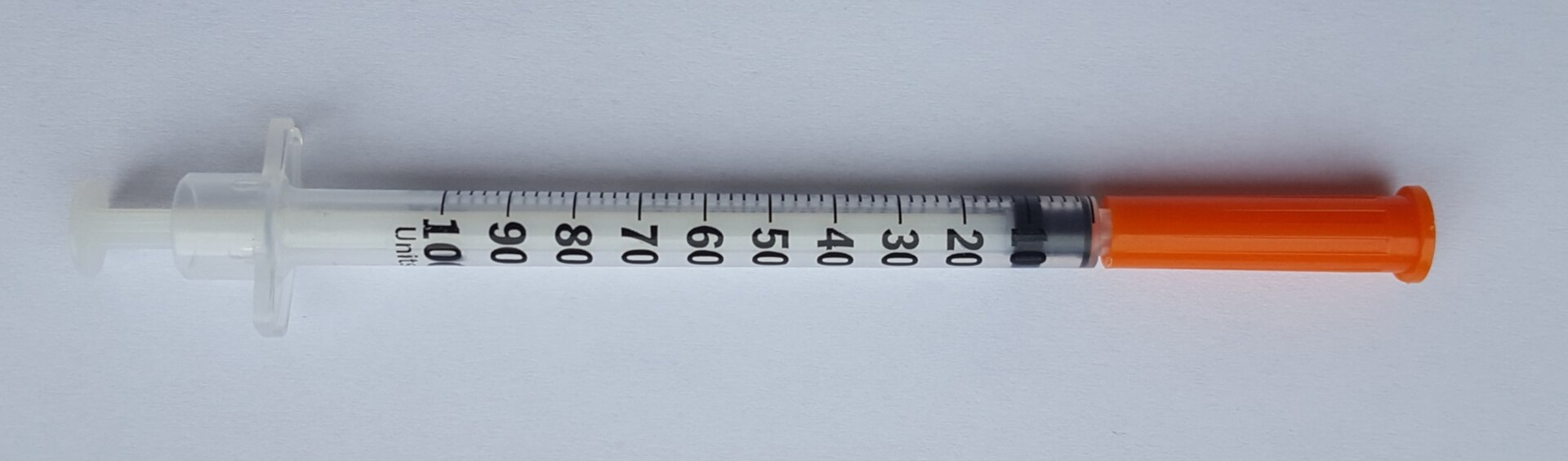
Both peptides arrive as freeze-dried powder, are mixed with bacteriostatic water, and are injected under the skin, usually in the belly. They are usually injected on an empty stomach, since food and insulin blunt GH release. Our reconstitution guide explains the mixing maths, and each product page has a measuring calculator and a body map of injection sites. Keep mixed vials refrigerated and use a fresh syringe every time.
Legal status
CJC-1295 and ipamorelin are not controlled substances in Canada, but neither is approved by Health Canada for human use; both are sold for research. Both are banned under the World Anti-Doping Agency code.
Frequently asked questions
Why combine CJC-1295 with ipamorelin?
They act on different receptors, so together they produce a bigger growth hormone pulse than either one alone.
What does DAC mean?
Drug Affinity Complex. It binds CJC-1295 to albumin in the blood, stretching its half-life from about 30 minutes to about a week.
How do I know if it is working?
An IGF-1 blood test after four to six weeks. A rise compared with your baseline shows the peptides are raising growth hormone.
Photo: Wesalius, Wikimedia Commons (CC BY 4.0).
General information about research compounds, not medical advice. CJC-1295 and ipamorelin are not approved for human use in Canada.
Related on Steroids Canada