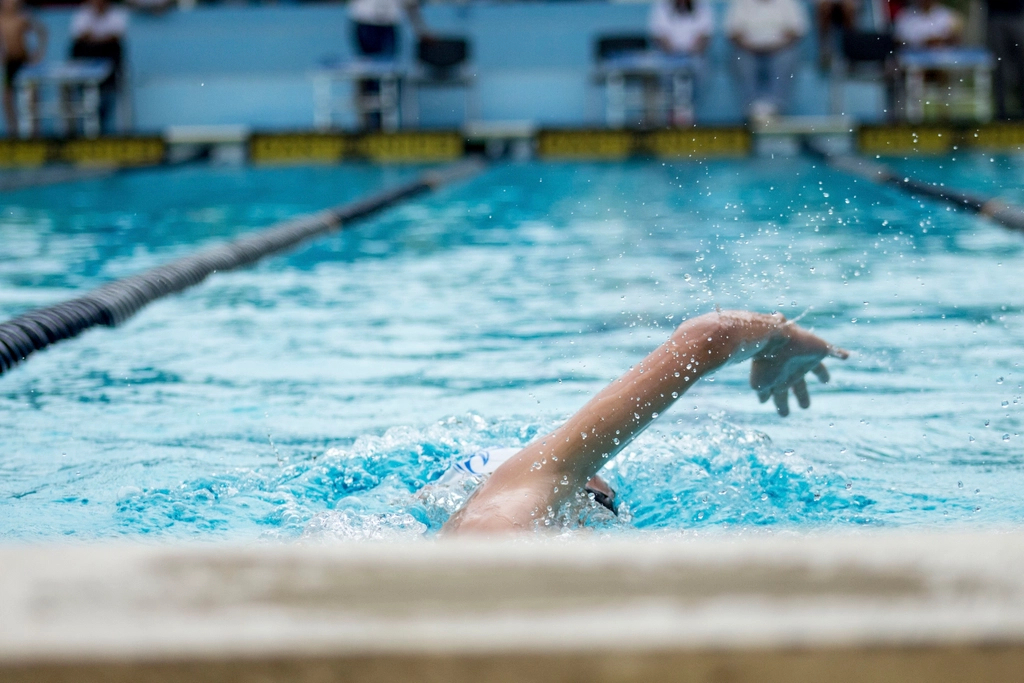
Swimming is a full-body, low-impact workout that builds fitness and burns calories, making it valuable for fat loss and for people with joint pain. Some studies suggest swimming increases appetite more than land exercise, so diet still needs attention.
- A moderate swim burns roughly 400–600 calories an hour for many adults.
- Water supports body weight, protecting joints.
- Intervals and varied strokes make sessions more effective.
Canada has thousands of public pools, and swimming is one of the most accessible year-round workouts. It suits beginners, people with joint problems and experienced athletes alike. Here is how to use it for fat loss.
Benefits of swimming
- Low impact: buoyancy takes pressure off the knees, hips and back.
- Full-body: works the shoulders, back, core and legs.
- Cardiovascular fitness: improves heart and lung capacity.
- Cooling: water keeps you cool, which some people find more comfortable than land exercise.
- Accessible: suitable from childhood to old age.
Calories burned
Energy use depends on body size, stroke, speed and skill. Rough estimates for a 75 kg adult:
| Activity (1 hour) | Approximate calories |
|---|---|
| Water walking or aquafit | 250–400 |
| Leisurely swimming | 350–450 |
| Moderate freestyle | 450–600 |
| Vigorous laps or butterfly | 650–800+ |
Beginners with less efficient technique may burn more per length but tire faster.
The hunger question
Some research, including a small study at Loughborough University, found people ate more after swimming than after cycling or running of similar effort, possibly because of the cooling effect of water. Others found no difference. Planning a protein-rich snack or meal after swimming helps avoid overeating.
Beginner pool workout (30–40 minutes)
- Warm-up: 4 × 25 m easy, any stroke, rest as needed
- Main set: 8 × 25 m at a moderate pace, 30–45 seconds rest
- Kick set: 4 × 25 m with a kickboard
- Water walking: 5 minutes in the shallow end
- Cool-down: 2 × 25 m easy
Intermediate workout (45 minutes)
- Warm-up: 200 m easy
- Main set: 6 × 100 m freestyle at a steady pace, 20 seconds rest
- Intervals: 8 × 50 m hard, 30 seconds rest
- Pull set: 4 × 50 m with a pull buoy
- Cool-down: 100–200 m easy
Water walking and aquafit
For people who cannot swim or are just starting, walking or jogging in chest-deep water is an excellent workout. Water resistance strengthens muscles while buoyancy protects joints. Many Canadian community pools run aquafit and deep-water running classes for all ages.
Mixing strokes
Varying strokes keeps sessions interesting and works muscles differently. Freestyle is the most efficient for distance; breaststroke is easier for beginners to keep their head above water but can irritate knees with the kick; backstroke is gentle on the neck and opens the chest; butterfly is very demanding and best in short bursts. Kickboard sets work the legs and hips, while pull buoys isolate the upper body. A balanced session might include several strokes plus kick and pull work.
Pool etiquette matters in busy Canadian public pools: choose a lane that matches your speed, swim counter-clockwise when sharing, and let faster swimmers pass at the wall.
Improving technique
Most adults swim inefficiently, which limits how long they can keep going. A few adult lessons, offered by city recreation programmes, YMCAs and Masters swim clubs across Canada, can make sessions far more effective and enjoyable.
Swimming through the year
Indoor pools make swimming one of the few activities unaffected by Canadian winters. Most cities post lane swim schedules online; early mornings and lunchtime are often quieter. Many facilities offer monthly passes or multi-visit cards that reduce the cost per swim. Swimming three times a week, 30–45 minutes each, is a realistic and effective routine for most people.
Combining swimming with strength training
Swimming builds endurance but limited strength. Pair it with two to three strength sessions a week to preserve muscle during weight loss. See preserving muscle and low-impact exercise for beginners.
Outdoor swimming in Canada
Lakes and oceans offer summer swimming, but water can stay cold well into June, especially in the Great Lakes, the Maritimes and British Columbia. Cold water causes cold shock and drains strength quickly. Swim with others, near shore, and wear a bright swim cap. See cold water safety.
Frequently asked questions
Is swimming good for losing weight?
Yes. It burns a meaningful number of calories and is easy on the joints, though diet still drives most weight loss.
How many calories does swimming burn?
Roughly 400–600 calories an hour at a moderate pace for many adults, more at higher intensity.
Why am I so hungry after swimming?
Some studies suggest the cooling effect of water increases appetite. Plan a protein-rich meal or snack afterwards.
Photo: rawpixel (public domain).
General information, not medical advice.
Related on Steroids Canada